
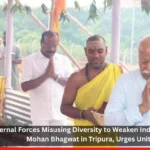
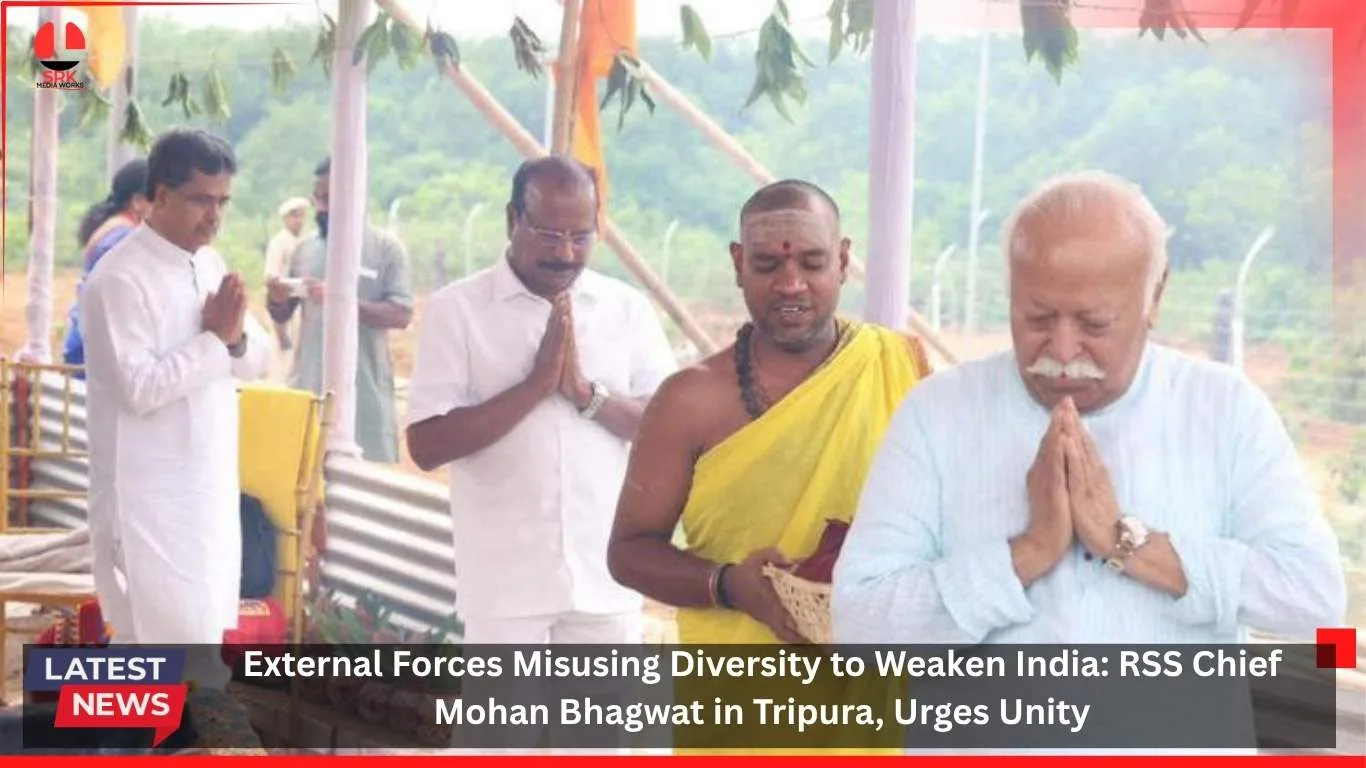
RSS chief Mohan Bhagwat, during his visit to Tripura, delivered a powerful message urging Indians to remain united against external forces that, he claimed, are attempting to misuse the country’s diversity to weaken its social fabric. Addressing a gathering, Bhagwat emphasized that India’s strength lies in its cultural plurality, but warned that adversarial elements are exploiting differences to create divisions.
Bhagwat’s Key Message
Mohan Bhagwat highlighted that India’s diversity—whether linguistic, cultural, or religious—has historically been a source of strength. However, he cautioned that external forces are deliberately misusing these differences to sow discord. He urged citizens to rise above divisions and work collectively for national unity and progress.
Political and Social Context
Bhagwat’s remarks come at a time when India is facing challenges from both internal and external fronts. Rising geopolitical tensions, combined with domestic debates on identity and culture, have created a complex environment. His appeal for unity resonates with the broader narrative of safeguarding national integrity.
Reactions to Bhagwat’s Statement
- Supporters: Welcomed his call for unity, stressing that diversity must be celebrated, not exploited.
- Critics: Questioned whether the RSS itself has contributed to polarization, urging introspection.
- Neutral Observers: Noted that his remarks reflect genuine concerns about external interference in domestic affairs.
Strategic Implications
Bhagwat’s speech underscores the importance of national solidarity in the face of global challenges. His emphasis on unity is seen as a call to strengthen social cohesion and resist divisive narratives.
| Stakeholder | Position on Remarks | Strategic Concern |
|---|---|---|
| RSS Supporters | Strongly supportive | National unity and cultural pride |
| Opposition Voices | Critical | Fear of polarization |
| Neutral Analysts | Balanced | External interference concerns |
| Citizens | Mixed reactions | Desire for peace and stability |
Historical Context of Unity Appeals
India’s leaders have often invoked unity during times of crisis. Bhagwat’s appeal echoes similar calls made in the past:
| Leader | Context | Message |
|---|---|---|
| Mahatma Gandhi | Freedom struggle | Unity across religions and regions |
| Jawaharlal Nehru | Post-independence | National integration |
| Mohan Bhagwat | Current challenges | Resist external misuse of diversity |
Social and Cultural Impact
Bhagwat’s remarks are expected to influence public discourse on diversity and national identity. His emphasis on unity could inspire grassroots movements aimed at fostering harmony, though critics argue that such appeals must be matched with inclusive policies.
| Area of Impact | Short-Term Effect | Long-Term Outcome |
|---|---|---|
| Social Cohesion | Renewed calls for unity | Stronger community bonds |
| Political Discourse | Debate on diversity | Policy shifts possible |
| Cultural Identity | Emphasis on shared heritage | Reinforcement of national pride |
Possible Scenarios Ahead
- Strengthened Unity: Citizens respond positively, leading to greater social cohesion.
- Political Debate: Opposition challenges RSS’s role, sparking wider discussions.
- Grassroots Movements: Local initiatives emerge to promote harmony.
- International Attention: Global observers note India’s efforts to safeguard diversity.
Expert Opinions
Social scientists argue that Bhagwat’s remarks highlight a genuine concern about external influences. Political analysts note that his speech may also serve to consolidate RSS’s ideological position. Economists suggest that unity is essential for sustained growth, as divisions could hinder development.
Conclusion
RSS chief Mohan Bhagwat’s appeal in Tripura, warning against external forces misusing India’s diversity, is a reminder of the importance of unity in safeguarding national integrity. His message resonates with historical calls for cohesion, while also sparking debate about the role of organizations and leaders in fostering inclusivity. Whether his words translate into tangible unity or remain symbolic will depend on collective action across society.
Disclaimer
This article is a journalistic analysis based on current events and public statements. It does not endorse or oppose any political leader or organization. Readers are encouraged to consider multiple perspectives and follow verified updates for a comprehensive understanding of the situation.