

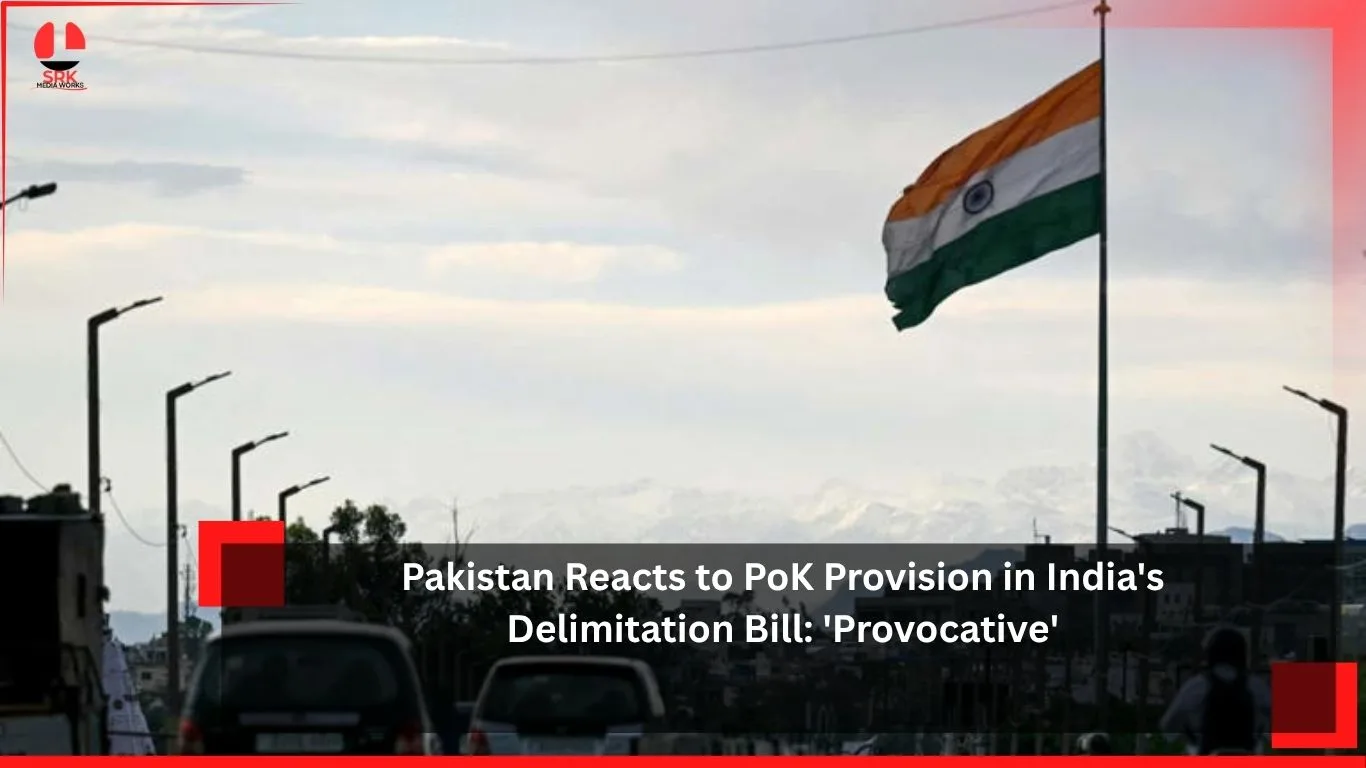
Pakistan has strongly reacted to the inclusion of provisions related to Pakistan-occupied Kashmir (PoK) in India’s newly proposed Delimitation Bill, calling the move “provocative” and “unacceptable.” The reaction underscores the deep-rooted tensions between the two nations over the Kashmir issue, which has remained a flashpoint for decades. India’s legislative step, aimed at redefining electoral boundaries, has triggered diplomatic ripples across the region and beyond.
Understanding the Delimitation Bill
The Delimitation Bill seeks to redraw electoral constituencies across India, including Jammu and Kashmir. The inclusion of PoK in the framework has been interpreted by Pakistan as a direct challenge to its claims and control over the territory. India maintains that PoK is an integral part of its sovereign territory, and any legislative reference to it is consistent with its constitutional position.
Key Features of the Bill
| Provision | Impact |
|---|---|
| Inclusion of PoK | Reinforces India’s claim over the territory |
| Redrawing Constituencies | Aims to balance representation based on population |
| Strengthening Governance | Seeks to improve electoral fairness in Jammu & Kashmir |
| National Integration | Symbolic assertion of India’s sovereignty |
The bill is part of India’s broader strategy to consolidate governance structures in Jammu and Kashmir following the abrogation of Article 370 in 2019.
Pakistan’s Response
Pakistan’s foreign ministry described the move as “provocative” and warned that it could escalate tensions in the region. Officials argued that India’s legislative step undermines international agreements and disregards the sentiments of the Kashmiri people. Pakistan has vowed to raise the issue at international forums, including the United Nations.
- Diplomatic Statements: Pakistan has accused India of attempting to alter the demographic and political landscape of Kashmir.
- Regional Concerns: Islamabad fears that the move could further marginalize Kashmiri voices and intensify unrest.
- International Outreach: Pakistan is expected to lobby allies and global institutions to condemn India’s actions.
India’s Position
India has consistently maintained that PoK is part of its territory and that legislative references to it are legitimate. The government argues that the Delimitation Bill is a domestic matter aimed at strengthening democratic representation. Indian officials have dismissed Pakistan’s objections as interference in internal affairs.
- Sovereignty Assertion: India views the inclusion of PoK as a reaffirmation of its territorial claims.
- Electoral Fairness: The bill is presented as a step toward ensuring balanced representation in Jammu and Kashmir.
- Legal Consistency: India emphasizes that its constitutional framework supports such provisions.
Historical Context
The Kashmir dispute dates back to 1947, when India and Pakistan gained independence. Multiple wars and decades of conflict have left the region divided, with India controlling Jammu and Kashmir and Pakistan administering PoK. The issue remains one of the most contentious in South Asian geopolitics.
Timeline of Key Events
| Year | Event |
|---|---|
| 1947 | Partition of India, first war over Kashmir |
| 1949 | Ceasefire line established, later known as Line of Control |
| 1972 | Simla Agreement, reaffirming bilateral resolution |
| 2019 | Abrogation of Article 370 by India |
| 2026 | Delimitation Bill references PoK |
This timeline highlights the enduring nature of the dispute and the recurring flashpoints that keep tensions alive.
Regional and International Reactions
The international community has responded cautiously to the development. While most countries avoid taking sides, there is concern about potential instability in South Asia.
- United States: Urges restraint and dialogue between India and Pakistan.
- China: Expresses concern, given its own interests in the region.
- European Union: Calls for peaceful resolution through negotiations.
- Middle Eastern Nations: Maintain neutrality but monitor developments closely.
Implications for Kashmir
The inclusion of PoK in the Delimitation Bill has symbolic and practical implications for Kashmir:
- Symbolic Assertion: Reinforces India’s claim over the entire region.
- Political Impact: Could reshape electoral representation in Jammu and Kashmir.
- Security Concerns: May lead to heightened tensions along the Line of Control.
- Diplomatic Fallout: Likely to intensify Pakistan’s lobbying efforts internationally.
Comparative Analysis of Reactions
| Country | Reaction | Likely Impact |
|---|---|---|
| Pakistan | Strong opposition, calls it provocative | Diplomatic escalation |
| India | Defends move as internal matter | Strengthens sovereignty claim |
| US | Calls for restraint | Encourages dialogue |
| China | Expresses concern | Monitors regional balance |
| EU | Neutral, urges peaceful resolution | Limited diplomatic engagement |
Domestic Reactions in India
Within India, reactions to the bill have been mixed. Supporters argue that it strengthens national unity and democratic representation, while critics warn that it could inflame tensions with Pakistan and complicate the situation in Kashmir.
- Government Supporters: View the bill as a bold assertion of sovereignty.
- Opposition Parties: Raise concerns about potential fallout and regional instability.
- Civil Society: Divided opinions, with some emphasizing democratic fairness and others warning of geopolitical risks.
Future Outlook
The Delimitation Bill is likely to remain a contentious issue in India-Pakistan relations. Pakistan’s strong reaction suggests that diplomatic tensions will escalate, while India’s firm stance indicates that it will not back down. The future trajectory will depend on whether both nations choose dialogue or confrontation.
Key Factors to Watch
| Factor | Potential Outcome |
|---|---|
| Pakistan’s International Lobbying | Increased pressure on India |
| India’s Domestic Politics | Consolidation of sovereignty claims |
| Regional Security | Possible escalation along Line of Control |
| Global Diplomacy | Calls for restraint and negotiations |
Conclusion
The inclusion of PoK in India’s Delimitation Bill has reignited tensions with Pakistan, which has labeled the move “provocative.” While India defends the bill as a domestic matter, Pakistan views it as a direct challenge to its claims. The development underscores the enduring volatility of the Kashmir issue and the complex interplay of domestic politics, regional security, and international diplomacy. As both nations navigate this sensitive moment, the world watches closely, aware that the consequences could shape South Asia’s stability for years to come.
Disclaimer
This article is a comprehensive analytical report based on publicly available information and political developments. It is intended for informational purposes only and does not constitute legal, diplomatic, or political advice. Readers are encouraged to verify facts independently and consider multiple perspectives before forming conclusions.