



Strategic Shifts in Foreign Policy
Former President Donald Trump, currently campaigning for the 2024 presidential election, stated this week that he would not seek an early conclusion to potential hostilities with Iran unless specific United States strategic objectives are fully realized. During a recent interview, Trump emphasized that a naval blockade would serve as a more effective and surgical tool for exerting pressure on Tehran than a traditional aerial bombing campaign.
The Context of US-Iran Relations
Tensions between Washington and Tehran have remained a centerpiece of American foreign policy for decades, characterized by cycles of sanctions, diplomatic standoffs, and regional proxy conflicts. The Trump administration previously withdrew from the Joint Comprehensive Plan of Action (JCPOA) in 2018, favoring a ‘maximum pressure’ campaign that utilized economic sanctions to isolate the Iranian regime. Current geopolitical instability in the Middle East has reignited debates regarding the efficacy of kinetic military force versus economic strangulation.
Evaluating Tactical Alternatives
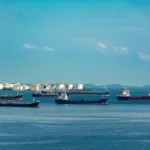
Military analysts suggest that a naval blockade represents a significant escalation in maritime warfare, requiring substantial assets to enforce effectively. By targeting Iran’s ability to export oil and receive imports, a blockade aims to cripple the nation’s economy without the domestic and international backlash often associated with large-scale civilian infrastructure damage from airstrikes. Experts note that such an operation would require coalition support to ensure international waters remain open for global commerce, a complex diplomatic hurdle.
Expert Analysis and Regional Impact
Dr. Elena Rossi, a fellow at the Center for Strategic and International Studies, points out that the transition from ‘maximum pressure’ to a physical blockade marks a distinct tactical evolution. ‘A blockade is not merely a diplomatic statement; it is an act of war under international law,’ Rossi observed. She added that while the policy avoids the optics of bombing, it significantly increases the risk of direct naval confrontations in the Strait of Hormuz, a critical chokepoint for global oil supplies.
Industry and Global Implications
For the global energy sector, the mere suggestion of a naval blockade creates immediate market volatility. As Iran remains a significant oil producer, any disruption to its export capacity would likely trigger sharp spikes in crude prices, affecting inflationary pressures worldwide. Shipping industries are already bracing for higher insurance premiums and diverted trade routes should the security environment in the Persian Gulf deteriorate further.
Future Outlook and Monitoring
Moving forward, international observers will be tracking whether this rhetoric signals a fundamental shift in Republican foreign policy doctrine toward more aggressive maritime containment. Market participants and regional stakeholders are expected to monitor the transition of presidential rhetoric into formal policy papers, as any move toward a blockade would necessitate a massive mobilization of the U.S. Fifth Fleet. Whether this approach can achieve long-term objectives without triggering a broader regional conflict remains the primary question for global security experts.