




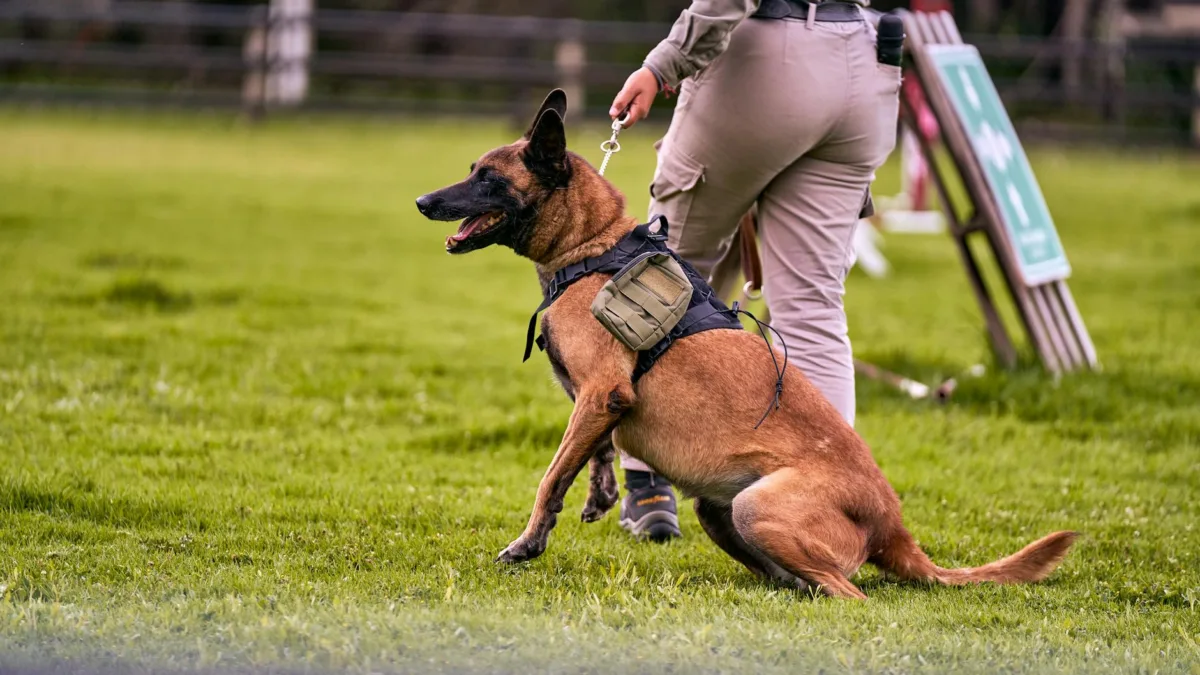
Max, a highly decorated Belgian Malinois sniffer dog, officially retired from the Central Industrial Security Force (CISF) this week in a moving ceremony held at the force’s training facility. After years of dedicated service in high-stakes security operations, the canine was honored with a formal military-style salute by his handlers and senior officers. His retirement marks the end of a career defined by operational excellence and the successful detection of illicit materials at critical infrastructure sites.
A Legacy of Operational Excellence
The CISF relies heavily on its canine squad to augment security protocols at airports, seaports, and power plants across the country. These dogs are trained to detect explosives, narcotics, and other prohibited items that standard electronic screening might miss. Max, who joined the force as a puppy, quickly distinguished himself during his initial training phases for his superior olfactory capabilities and unwavering focus.
Throughout his tenure, Max was deployed to several sensitive security zones where his ability to identify threats contributed directly to the safety of public facilities. According to CISF internal reports, dogs like Max serve as a critical layer of defense, providing a flexible and mobile solution to perimeter security. Their presence acts not only as a deterrent but as a highly efficient tool for rapid threat assessment.
The Training and Bond of Canine Units
The relationship between a CISF dog and its handler is built on years of rigorous daily training and mutual trust. Handlers are responsible for the animal’s physical health, dietary needs, and psychological well-being, creating a bond that is essential for effective fieldwork. This partnership ensures that the canine can perform under immense pressure in crowded or chaotic environments.
Dr. Anjali Rao, a veterinary specialist in canine security training, notes that the retirement of a veteran dog is a significant transition for both the animal and the unit. ‘These dogs are not just assets; they are partners,’ she explains. ‘When a dog like Max retires, the unit loses a wealth of experience, but the training protocols ensure that the younger generation of recruits is well-prepared to maintain the same standard of security.’
Industry Standards and Security Protocols
The use of canine units in industrial security has seen a steady increase as global threats become more sophisticated. Data from the International Security Federation suggests that canine detection remains one of the most effective non-invasive screening methods available today. Despite advancements in AI-driven security technology, the biological capabilities of a well-trained dog remain unmatched in real-world, high-traffic scenarios.
The CISF has recently implemented updated welfare policies for retired service dogs, ensuring they are adopted into stable environments where they can live out their lives in comfort. This shift highlights a broader industry trend toward recognizing the lifelong contributions of working animals. Officers often advocate for these policies, emphasizing that the service provided by these animals entitles them to a dignified retirement.
Looking Toward the Future of Canine Security
As Max transitions to civilian life, the CISF is already integrating new recruits into the specialized detection programs. The agency is looking to enhance its breeding and training programs to focus on increased stamina and environmental adaptability. Observers will be watching to see how the force balances the introduction of new sensor-based technologies with the continued reliance on these highly skilled canine units. The success of the next generation of sniffer dogs will be measured by their ability to uphold the standard set by veterans like Max.