





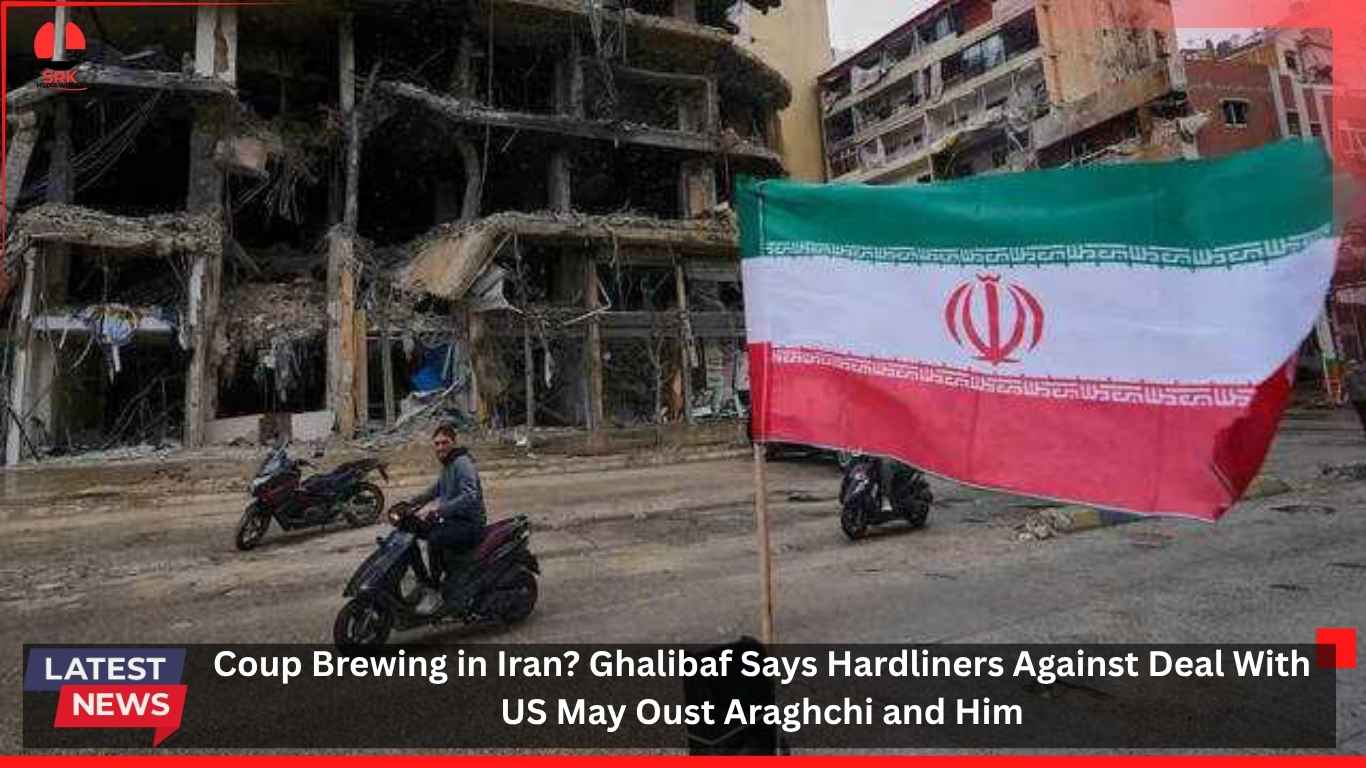
Political tremors are shaking Tehran after Iranian parliamentary speaker Mohammad Bagher Ghalibaf suggested that hardline factions opposed to a potential deal with the United States may attempt to oust him and Deputy Foreign Minister Abbas Araghchi. His remarks have fueled speculation about a brewing coup within Iran’s political establishment, highlighting the deep divisions between reformist voices seeking engagement with Washington and hardliners determined to resist any compromise.
Ghalibaf’s Warning
Ghalibaf, a prominent conservative figure himself, surprised observers by openly acknowledging the threat posed by hardliners who view negotiations with the US as betrayal. His statement underscores the fragile balance of power within Iran’s political system, where the Supreme Leader, the Revolutionary Guard, and various factions compete for influence.
Key Points:
- Hardliners reportedly mobilizing against US deal supporters.
- Ghalibaf and Araghchi identified as potential targets for ouster.
- Internal divisions intensify amid ongoing sanctions and economic crisis.
- Coup speculation reflects broader instability in Iran’s governance.
Araghchi’s Role
Deputy Foreign Minister Abbas Araghchi has been a central figure in Iran’s diplomatic efforts, particularly in nuclear negotiations. His pragmatic approach has often clashed with hardline resistance, making him a lightning rod for criticism. The possibility of his removal signals a push by hardliners to derail diplomatic engagement.
| Actor | Position | Role in US Deal | Risk of Ouster |
|---|---|---|---|
| Ghalibaf | Speaker of Parliament | Support for cautious engagement | High |
| Araghchi | Deputy Foreign Minister | Lead negotiator | Very High |
| Hardliners | Conservative factions | Oppose US deal | Rising influence |
| Supreme Leader | Ultimate authority | Balancing factions | Decisive role |
Pivot Analysis of Power Struggle
| Institution | Stance on US Deal | Influence | Potential Outcome |
|---|---|---|---|
| Parliament | Divided | Moderate | Possible leadership shake-up |
| Foreign Ministry | Pro-engagement | Moderate | Risk of losing key negotiators |
| Revolutionary Guard | Strongly opposed | High | Increased pressure on moderates |
| Supreme Leader | Balancing act | Very High | Final arbiter of crisis |
Economic Context
The coup speculation comes against the backdrop of Iran’s struggling economy. Sanctions have crippled trade, inflation has soared, and public discontent is rising. Supporters of engagement argue that a deal with the US could ease economic pain, while hardliners insist that resistance is the only path to sovereignty.
| Scenario | Economic Impact | Political Effect |
|---|---|---|
| US Deal Approved | Sanctions relief, economic recovery | Strengthens moderates |
| Coup Against Moderates | Continued sanctions, deeper crisis | Hardliner dominance |
| Stalemate | Prolonged instability | Public frustration |
Regional Implications
The possibility of a coup in Iran has significant implications for the Middle East. Neighboring countries are closely watching developments, as instability in Tehran could affect regional security, energy markets, and diplomatic alignments.
Regional Effects:
- Gulf states may bolster security measures.
- Israel likely to intensify monitoring of Iran’s internal politics.
- Turkey and Russia may seek to exploit divisions for strategic gain.
- China could push for stability to protect energy interests.
Historical Context
Iran has experienced internal power struggles throughout its modern history. From the revolution of 1979 to factional disputes in subsequent decades, the balance between hardliners and moderates has often determined the country’s trajectory. The current crisis echoes past moments when internal divisions threatened governance stability.
Possible Outcomes
- Hardliner Coup: Ghalibaf and Araghchi ousted, leading to collapse of US deal negotiations.
- Supreme Leader Intervention: Balance maintained, moderates retained, talks continue cautiously.
- Prolonged Stalemate: Neither side prevails, resulting in ongoing instability.
- Public Pressure: Economic crisis forces leadership to prioritize engagement despite internal opposition.
Conclusion
Ghalibaf’s warning about a potential coup against himself and Araghchi highlights the volatile state of Iranian politics. Hardliners’ resistance to a US deal reflects deep ideological divides, while moderates argue for engagement to ease economic hardship. The outcome of this struggle will shape not only Iran’s future but also the broader geopolitical landscape of the Middle East.
Disclaimer
This article is an analytical overview of reported political tensions in Iran. It is based on current developments and historical context, and does not represent official government positions. Readers should follow authoritative updates for the latest information on Iran’s internal politics and foreign policy.