







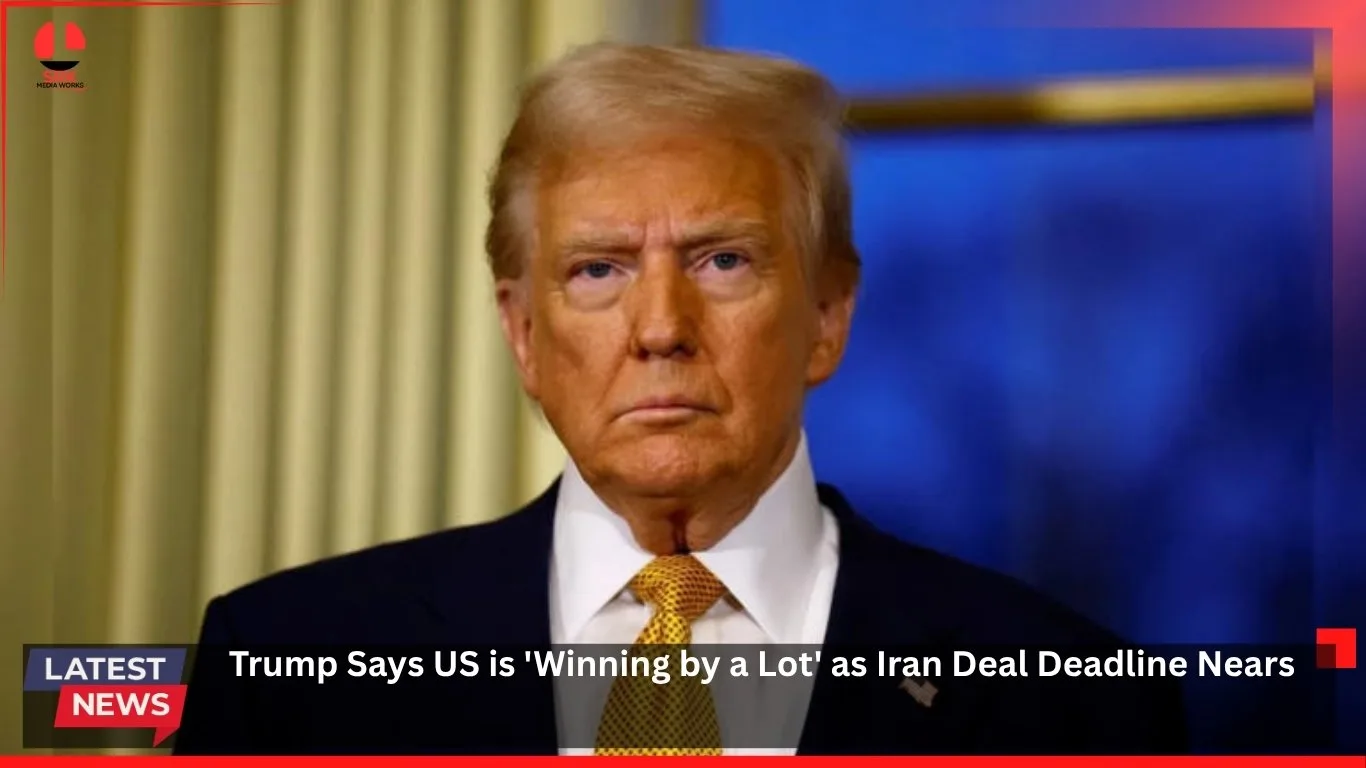
As the deadline for a potential new deal with Iran approaches, Donald Trump has declared that the United States is “winning by a lot,” signaling confidence in Washington’s negotiating position. His remarks come amid heightened tensions, ongoing sanctions, and diplomatic maneuvering that could reshape the future of US-Iran relations. The statement has sparked debate among analysts, allies, and critics about the true state of negotiations and the broader geopolitical implications.
Trump’s Assertion
Trump’s claim of “winning by a lot” reflects his administration’s belief that maximum pressure tactics—sanctions, military presence, and diplomatic isolation—have weakened Iran’s bargaining power. The US insists that Iran must comply with strict conditions before any relief is granted, while Tehran argues that Washington’s approach undermines trust and stability.
Key Highlights:
- Trump emphasizes US leverage in negotiations.
- Sanctions continue to strain Iran’s economy.
- Deadline for deal renewal or collapse looms.
- Allies and adversaries closely monitoring developments.
Iran’s Position
Iranian leaders have repeatedly criticized US tactics, calling them coercive and unjust. Tehran insists that sanctions relief is essential for any meaningful agreement, while rejecting demands it views as excessive. The looming deadline has intensified internal debates within Iran’s political establishment.
| Issue | US Position | Iran Position | Likely Outcome |
|---|---|---|---|
| Sanctions | Maintain until compliance | Demand immediate relief | Negotiation deadlock |
| Nuclear Program | Strict limits | Sovereign right to enrichment | Conditional compromise |
| Regional Influence | Reduce military activity | Maintain alliances | Continued tension |
| Diplomacy | Conditional engagement | Equal recognition | Fragile progress |
Pivot Analysis of Negotiation Dynamics
| Actor | Role | Leverage | Expected Outcome |
|---|---|---|---|
| US | Maximum pressure | Sanctions, military presence | Strong bargaining position |
| Iran | Resistance | Regional influence, energy routes | Push for relief |
| Allies (EU) | Mediators | Trade interests | Support for compromise |
| Gulf States | Regional stakeholders | Security concerns | Alignment with US |
Global Reactions
The international community remains divided. European nations urge compromise to prevent escalation, while Russia and China criticize US tactics and support Iran’s demand for sanctions relief. Gulf states, meanwhile, back Washington’s hardline stance, fearing Iran’s regional ambitions.
International Highlights:
- EU calls for balanced diplomacy.
- Russia accuses US of destabilization.
- China emphasizes energy security.
- Gulf states reinforce security cooperation with Washington.
Economic Implications
The outcome of the negotiations will have significant economic consequences. Sanctions have crippled Iran’s economy, while global markets remain sensitive to developments in the Gulf. A deal could stabilize oil prices, while failure may trigger volatility.
| Scenario | Economic Impact | Market Effect |
|---|---|---|
| Successful Deal | Sanctions relief, economic recovery | Stabilization |
| Failed Talks | Continued sanctions, deeper crisis | Volatility |
| Partial Agreement | Limited relief, gradual recovery | Mixed signals |
Military Context
The US maintains a strong military presence in the Gulf, reinforcing its negotiating position. Iran’s Revolutionary Guard continues to assert control over strategic waterways, raising the risk of miscalculation. Military dynamics remain central to the negotiations.
Military Highlights:
- US carrier groups stationed in Gulf waters.
- Iran’s missile and drone activity monitored.
- Regional allies on alert.
- Risk of escalation remains high.
Historical Context
US-Iran relations have been marked by decades of mistrust, sanctions, and sporadic confrontations. Previous deals, such as the 2015 nuclear agreement, collapsed under pressure, leaving both sides wary of new commitments. Trump’s current stance reflects continuity in Washington’s hardline approach.
Possible Outcomes
- Comprehensive Agreement: Full deal covering sanctions, nuclear limits, and regional security.
- Partial Agreement: Limited progress on specific issues, with continued negotiations.
- Stalemate: Talks collapse, leading to prolonged tension.
- Escalation: Renewed conflict triggered by failed diplomacy.
Conclusion
Trump’s declaration that the US is “winning by a lot” as the Iran deal deadline nears underscores Washington’s confidence in its negotiating position. However, the path forward remains uncertain, with deep divisions between the two sides and significant global implications. The coming days will determine whether diplomacy prevails or confrontation escalates.
Disclaimer
This article is an analytical overview of ongoing US-Iran negotiations and Trump’s recent remarks. It is based on current developments and historical context, and does not represent official government positions. Readers should follow authoritative updates for the latest information on diplomacy and security.