









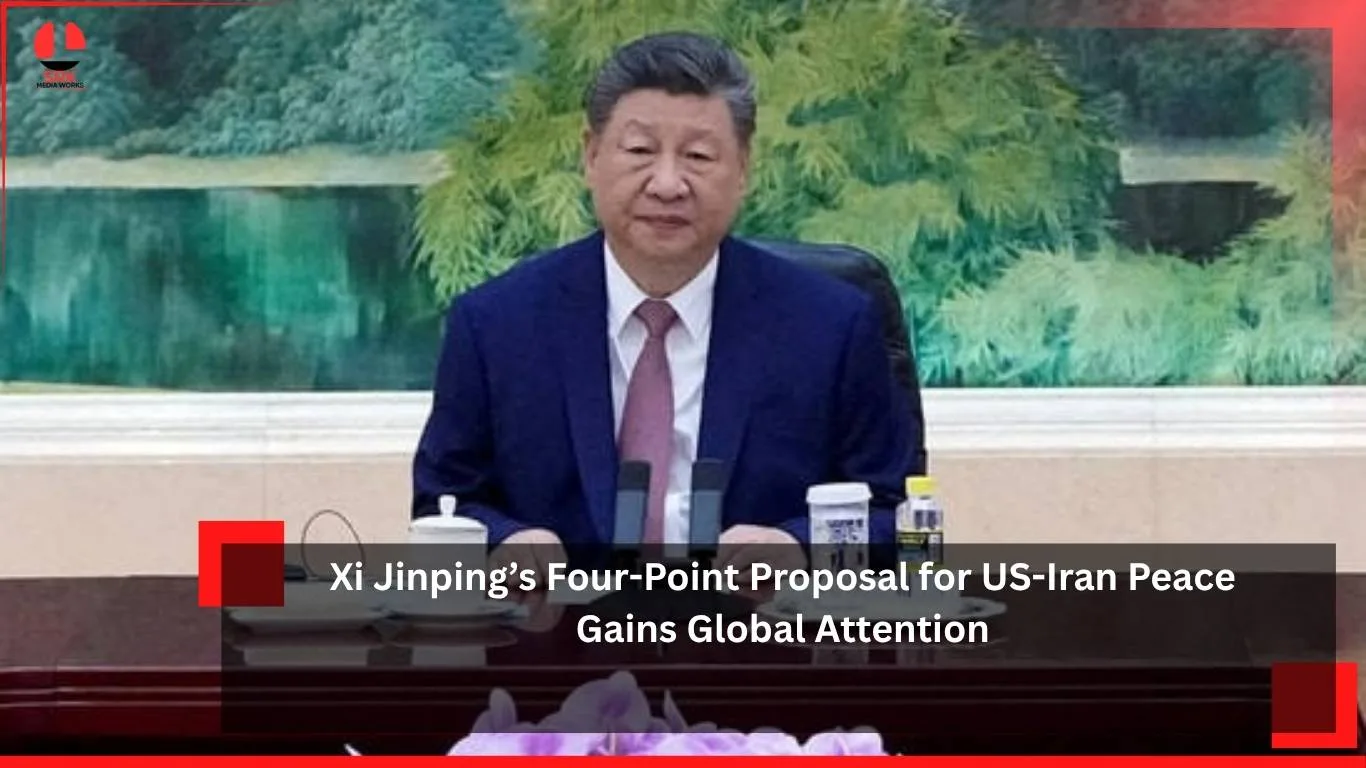
Chinese President Xi Jinping has introduced a comprehensive four-point proposal aimed at fostering lasting peace between the United States and Iran. This initiative, announced during a high-level diplomatic engagement, underscores China’s growing role in mediating global conflicts and promoting stability in the Middle East. The proposal emphasizes dialogue, sovereignty, security, and adherence to international law, positioning China as a neutral broker in one of the world’s most volatile geopolitical disputes.
The Four Points of Xi Jinping’s Proposal
1. Peaceful Coexistence
Xi Jinping urged Washington and Tehran to abandon confrontation and embrace dialogue as the primary means of resolving disputes. He highlighted that peace cannot be achieved through threats or sanctions but through mutual respect and constructive engagement.
2. Respect for Sovereignty
The proposal stresses that the sovereignty, territorial integrity, and independence of all nations in West Asia must be respected. Xi emphasized that external interference undermines trust and escalates tensions, calling for a balanced approach that recognizes Iran’s right to self-determination while ensuring regional stability.
3. Coordinated Security and Development
Xi’s plan links security with economic development, arguing that sustainable peace requires both. He proposed joint initiatives in energy, infrastructure, and trade to build trust and reduce hostility. By fostering economic interdependence, the proposal seeks to create incentives for cooperation rather than conflict.
4. Adherence to International Law
The final point calls for strict compliance with international law and multilateral agreements. Xi urged both nations to recommit to frameworks such as the United Nations Charter and nuclear non-proliferation treaties, ensuring that disputes are resolved within established legal boundaries.
Strategic Implications
China’s proposal comes at a time when US-Iran relations remain strained over nuclear enrichment, sanctions, and regional influence. By offering a structured peace framework, Beijing positions itself as a mediator capable of balancing Western interests with Middle Eastern realities. Analysts suggest that this move reflects China’s broader ambition to expand its diplomatic footprint beyond trade and infrastructure.
Comparative Analysis of Peace Initiatives
| Initiative | Key Focus | Outcome |
|---|---|---|
| US-led JCPOA (2015) | Nuclear restrictions | Collapsed after US withdrawal |
| EU Mediation Efforts | Diplomatic dialogue | Limited success |
| Xi’s Four-Point Proposal | Sovereignty, security, development, law | Pending acceptance |
This comparison highlights how Xi’s proposal differs by integrating economic cooperation with political dialogue, offering a holistic approach rather than focusing solely on nuclear issues.
Regional Reactions
- Iran: Welcomed the proposal as recognition of its sovereignty and a chance to ease sanctions pressure.
- United States: Expressed cautious interest but stressed that Iran must first demonstrate compliance with nuclear obligations.
- Middle Eastern States: Countries like Saudi Arabia and the UAE view the proposal as a potential stabilizer, though concerns remain about Iran’s regional ambitions.
- European Union: Supports China’s involvement, seeing it as complementary to ongoing diplomatic efforts.
Pivot Analysis: Peace vs. Confrontation
| Scenario | Security Impact | Economic Impact | Diplomatic Impact |
|---|---|---|---|
| Continued Confrontation | Escalation of conflicts | Sanctions deepen recession | Diplomatic isolation |
| Adoption of Xi’s Proposal | Regional stability | Growth through trade | Renewed multilateralism |
This pivot analysis demonstrates how adopting Xi’s framework could shift the trajectory of US-Iran relations from hostility to cooperation.
Global Significance
Xi’s four-point plan is not just about US-Iran relations; it reflects China’s broader vision of reshaping global governance. By promoting sovereignty and development, Beijing challenges Western interventionist models and offers an alternative rooted in non-interference and economic partnership. This approach resonates with many developing nations seeking balanced diplomacy.
Challenges Ahead
Despite its promise, the proposal faces hurdles:
- Trust Deficit: Decades of hostility between Washington and Tehran make dialogue difficult.
- Nuclear Concerns: The US insists Iran must halt enrichment before negotiations.
- Geopolitical Rivalries: Regional powers may resist China’s growing influence.
- Implementation: Translating principles into actionable agreements requires sustained commitment.
Conclusion
Xi Jinping’s four-point proposal represents a bold attempt to reshape the dynamics of US-Iran relations. By emphasizing peaceful coexistence, sovereignty, coordinated security and development, and adherence to international law, China seeks to provide a roadmap for lasting peace. Whether this initiative succeeds depends on the willingness of both nations to embrace dialogue over confrontation, and on the global community’s support for a balanced, multilateral approach.
Disclaimer
This article is a synthesized news analysis created for informational purposes. It does not represent official government statements or endorsements. While efforts have been made to ensure accuracy, readers are advised to consult multiple sources for a comprehensive understanding of the topic. The content is intended for educational and journalistic use only.