






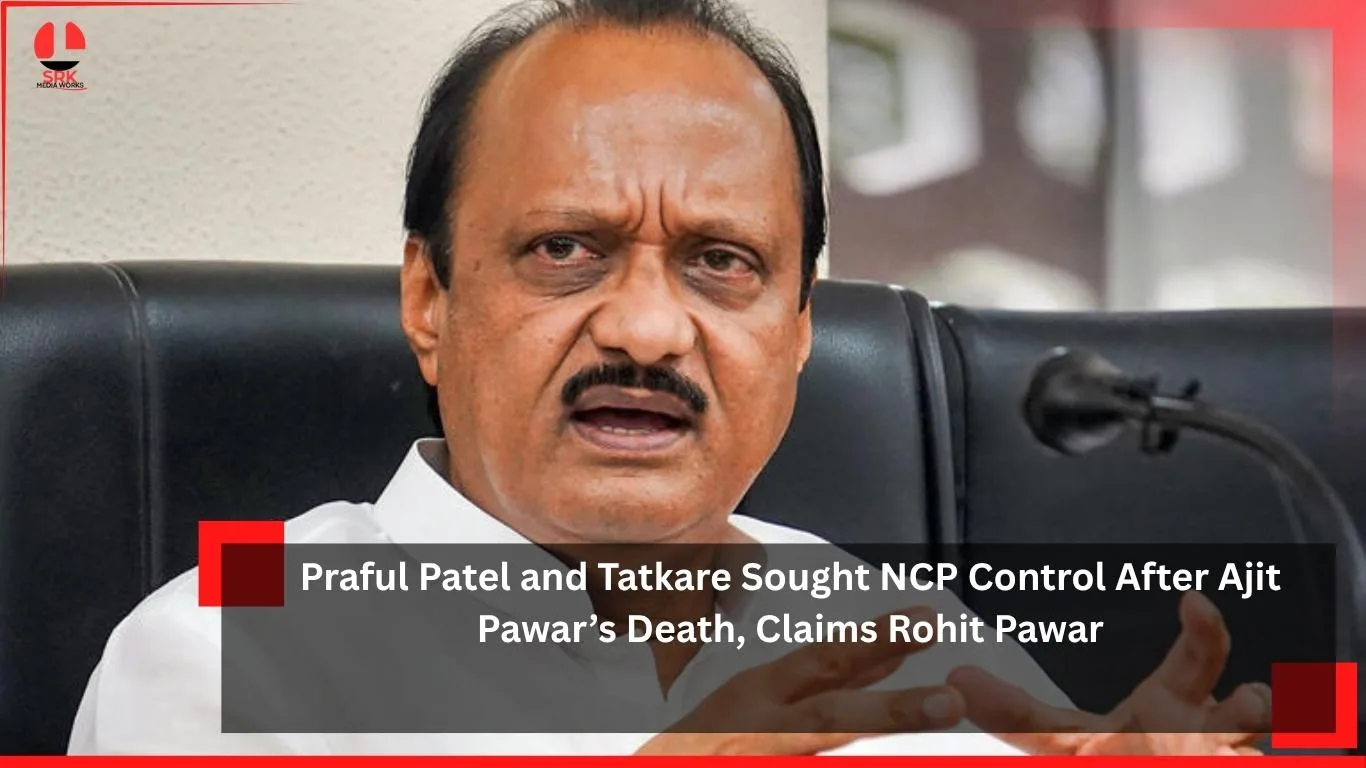
In a dramatic revelation that has stirred Maharashtra’s political landscape, Rohit Pawar has alleged that senior leaders Praful Patel and Sunil Tatkare attempted to take control of the Nationalist Congress Party (NCP) following Ajit Pawar’s death. According to Rohit Pawar, both leaders wrote to the Election Commission (EC) seeking recognition of their faction as the legitimate NCP, sparking a fresh round of controversy within the party.
The Allegation
Rohit Pawar, a prominent NCP leader and nephew of Sharad Pawar, claimed that Patel and Tatkare moved swiftly to consolidate power after Ajit Pawar’s demise. Their letter to the EC reportedly sought to establish their faction as the rightful heir to the NCP legacy, sidelining other leaders and attempting to reshape the party’s future direction.
This allegation has intensified the ongoing battle for control within the NCP, which has already been fractured by internal divisions and shifting alliances.
Historical Context of NCP Splits
The NCP, founded by Sharad Pawar in 1999, has faced multiple internal challenges over the years. Ajit Pawar’s political maneuvers, including his controversial alliances, have often created turbulence within the party. His death left a leadership vacuum, and Rohit Pawar’s claim suggests that Patel and Tatkare sought to exploit this moment of uncertainty.
Key Figures in the Controversy
- Praful Patel: A veteran politician with strong organizational skills, Patel has long been considered a strategist within the NCP.
- Sunil Tatkare: Known for his influence in Maharashtra politics, Tatkare has played a crucial role in regional mobilization.
- Rohit Pawar: Emerging as a vocal leader, Rohit has positioned himself as a defender of Sharad Pawar’s legacy.
Impact on Party Unity
The alleged move has deepened fissures within the NCP. Party workers and loyalists are now divided between factions, raising questions about the future of the organization. The EC’s role becomes critical in determining which faction holds legitimacy.
Comparative Analysis of NCP Factions
| Faction Leader | Strategy | Support Base | Current Strength |
|---|---|---|---|
| Sharad Pawar | Legacy & Ideology | Traditional loyalists, rural base | Strong but aging |
| Ajit Pawar (before death) | Pragmatic Alliances | Urban and regional leaders | Moderate |
| Patel & Tatkare | Organizational Control | Regional networks, EC recognition attempt | Emerging |
Political Implications
- Electoral Consequences: A divided NCP could weaken its performance in upcoming state elections.
- Alliances at Risk: The party’s ability to negotiate alliances with Congress or regional outfits may be compromised.
- Leadership Vacuum: Sharad Pawar’s advancing age and Ajit Pawar’s absence leave the party vulnerable to internal power struggles.
- EC’s Decision: Recognition of one faction could alter Maharashtra’s political balance significantly.
Lessons from Past Party Splits
Indian politics has witnessed similar episodes where factions sought EC recognition:
- Samajwadi Party Split (2017): Akhilesh Yadav vs. Mulayam Singh factions.
- Shiv Sena Split (2022): Eknath Shinde vs. Uddhav Thackeray factions.
- AIADMK Split (2017): Sasikala vs. OPS factions.
These examples show that EC decisions often reshape political landscapes, determining which faction gains electoral symbols and legitimacy.
Future Outlook for NCP
The NCP’s trajectory will depend on:
- EC’s Recognition: Which faction gets the party symbol.
- Sharad Pawar’s Role: Whether he can unify the party or allow generational change.
- Regional Dynamics: Maharashtra’s voters may respond differently to fractured leadership.
- National Alliances: The NCP’s position in opposition coalitions could weaken if internal disputes persist.
Conclusion
Rohit Pawar’s allegation that Praful Patel and Sunil Tatkare sought to take over the NCP after Ajit Pawar’s death underscores the fragility of political organizations built on strong personalities. The move highlights the importance of succession planning and organizational unity in Indian politics. As the EC deliberates, the future of the NCP remains uncertain, with implications not only for Maharashtra but also for national opposition politics.
Disclaimer
This article is intended for informational purposes only and does not represent official confirmation of events. The content is based on political claims and general observations. Readers should note that allegations in politics are subject to verification, and final decisions rest with constitutional authorities like the Election Commission.