







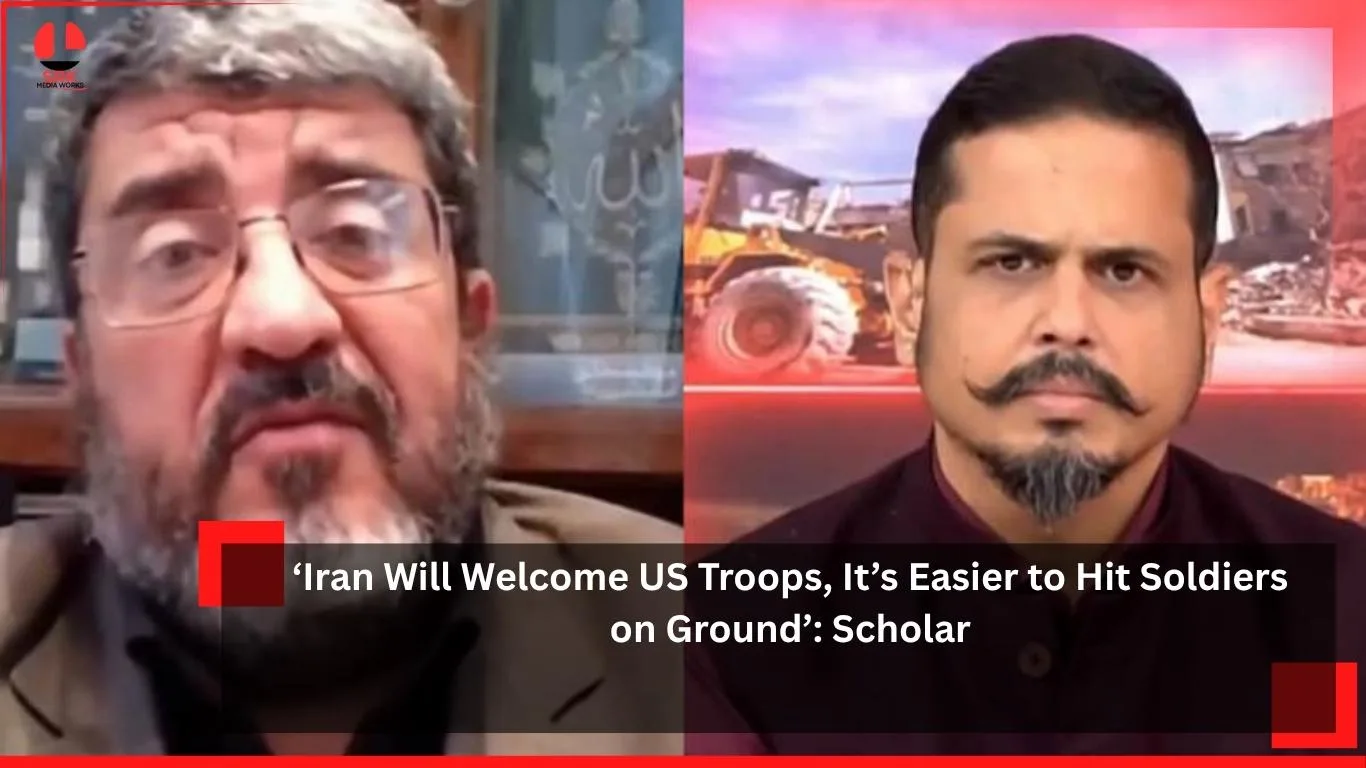
A provocative statement by a Middle Eastern scholar has reignited debate over U.S. military strategy in the region. The scholar argued that Iran would “welcome” the presence of American troops on its soil, not as a gesture of hospitality, but as a tactical advantage. According to him, soldiers on the ground are far easier to target than distant air bases or naval fleets, making troop deployment a potential liability for Washington.
Context of the Statement
The remark comes amid heightened tensions between the U.S. and Iran, with military maneuvers and political rhetoric escalating on both sides. The scholar’s perspective reflects a broader sentiment in Iran’s strategic circles: that direct confrontation with U.S. ground forces could play to Iran’s strengths in asymmetric warfare.
Why Iran Prefers Ground Engagement
- Terrain Advantage: Iran’s geography, with mountains and urban centers, favors defensive and guerrilla tactics.
- Asymmetric Warfare: Iran has long relied on proxy militias, improvised explosive devices (IEDs), and ambush strategies.
- Public Mobilization: Ground presence of foreign troops often fuels nationalist sentiment, strengthening local resistance.
- Cost Efficiency: Targeting ground troops requires fewer resources compared to striking advanced aircraft or naval fleets.
- Psychological Impact: Casualties among U.S. soldiers could erode domestic support for prolonged military campaigns.
Comparative Military Strategies
| Strategy | United States | Iran |
|---|---|---|
| Air Power | Advanced jets, drones | Limited, defensive |
| Naval Power | Global fleets | Regional presence |
| Ground Engagement | Heavy deployment | Guerrilla tactics |
| Proxy Warfare | Limited use | Extensive networks |
| Cyber Operations | Global reach | Regional disruption |
This comparison shows why Iran views U.S. ground troops as vulnerable targets, while the U.S. relies heavily on air and naval superiority.
Pivot in Military Thinking
The scholar’s statement highlights a pivot in military thinking: wars are no longer won solely by superior technology. Instead, adaptability, terrain, and asymmetric strategies often determine outcomes. Iran’s confidence in facing U.S. troops on the ground reflects this shift.
Lessons from Past Conflicts
- Iraq War (2003): U.S. forces faced prolonged insurgency despite initial military success.
- Afghanistan War (2001–2021): Guerrilla tactics and local resistance outlasted U.S. technological superiority.
- Lebanon Conflict (2006): Hezbollah’s asymmetric warfare challenged Israel’s conventional power.
These examples reinforce the scholar’s claim that ground troops are vulnerable in hostile environments.
Sentiment Analysis
| Group | Sentiment Toward U.S. Troops | Likely Response |
|---|---|---|
| Iranian Military | Confident, opportunistic | Direct engagement |
| Iranian Civilians | Nationalist, resistant | Mobilization |
| U.S. Military | Cautious, wary | Avoid prolonged ground war |
| Global Observers | Concerned about escalation | Push for diplomacy |
Broader Implications
- U.S. Strategy Reevaluation: Washington may reconsider large-scale troop deployments in favor of air and cyber operations.
- Regional Instability: Ground presence could inflame tensions across the Middle East.
- Global Perception: Iran’s confidence challenges the narrative of U.S. military invincibility.
- Diplomatic Pressure: Allies may urge restraint to avoid another prolonged conflict.
Conclusion
The scholar’s assertion that “Iran will welcome U.S. troops” underscores the complexities of modern warfare. While America boasts unmatched military resources, Iran’s reliance on asymmetric tactics and terrain advantages makes ground engagement a risky proposition. The statement serves as a reminder that military superiority does not guarantee easy victories, and that strategy must adapt to evolving realities.
Disclaimer
This article is intended for informational purposes only and does not represent official military analysis or government policy. The content is based on general geopolitical observations and public statements. Readers should note that claims made by scholars or political figures are subject to interpretation and verification.