








In a significant response to the escalating demand for efficient urban living, leading interior design experts are actively sharing innovative strategies to transform compact apartments into spacious, functional, and aesthetically pleasing homes. This trend, driven by global urbanization and rising property costs, offers practical, actionable advice on furniture, furnishings, and lighting, empowering residents to maximize their limited square footage without compromising on style or comfort.
The relentless march of urbanization has fundamentally reshaped how millions live, particularly in dense metropolitan areas worldwide. As city populations swell and the cost of real estate continues its upward trajectory, smaller living spaces—from cozy studios to compact two-bedroom apartments—have become the norm for many. This lifestyle, while offering unparalleled access to work, culture, and amenities, often presents the inherent challenge of making limited square footage feel expansive, organized, and inviting rather than cramped or claustrophobic. Consequently, the interior design industry has pivoted, focusing intensely on ingenious solutions that transcend simple decluttering. This shift reflects a growing consumer desire for intelligent design that not only saves space but actively enhances well-being and daily functionality, making the most of every precious square foot in the modern urban dwelling.
Smart Furniture: The Foundation of Spaciousness
Transforming a compact room from a restrictive area into an open, inviting space fundamentally begins with a strategic re-evaluation of its core elements: furniture. Design experts advocate for a dynamic approach to furniture selection, prioritizing multi-functionality, visual lightness, and adaptability. Shagufta Anurag, Chief Design Evangelist and co-founder of Livspace, articulates this paradigm shift clearly. “To make any room spacious, think about your furniture differently. Would folding chairs suffice?” she advises, highlighting the immense utility of items that can be effortlessly collapsed and tucked away when not actively in use, freeing up valuable floor space.
Anurag further suggests innovative alternatives to traditional, bulky pieces. Opting for a sleek bedside shelf in place of a conventional nightstand, for instance, can significantly open up visual space while retaining essential functionality. The concept of mobility also plays a crucial role in flexible living; considering a rolling table over a stationary one offers unparalleled versatility, allowing residents to reconfigure their space for various activities. For sleeping arrangements, a compact bed is often preferred over a grand poster bed, which can visually overwhelm and shrink a small room. Crucially, furniture integrated with smart storage solutions—such as ottomans with hidden compartments or beds with built-in drawers—proves invaluable, helping to minimize visible clutter and maximize every available inch, contributing to a sense of order and calm.
Strategic Furnishings: Weaving in Light and Privacy
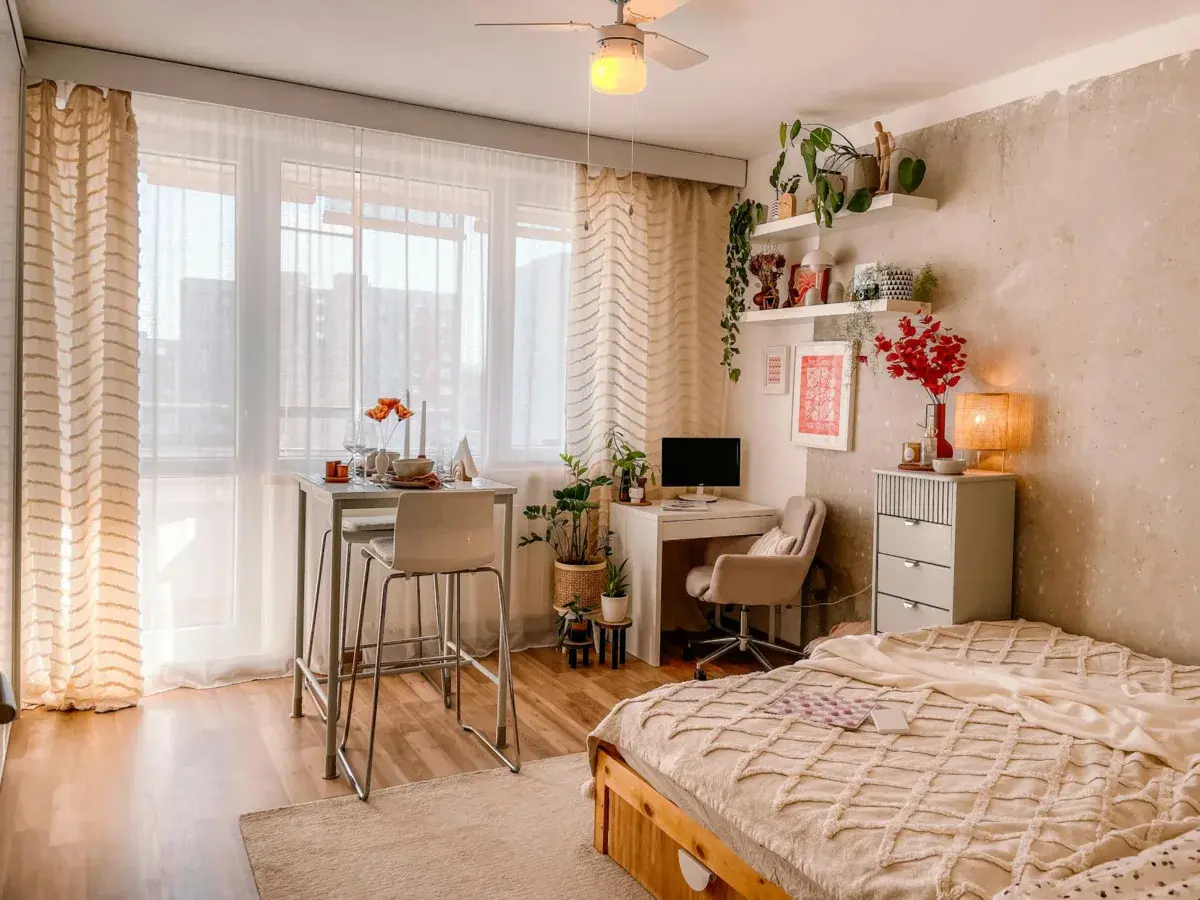
Beyond the foundational furniture, the careful selection of furnishings significantly influences the perception of space, warmth, and light within a compact environment. Textiles like curtains, drapes, and rugs can either expand or inadvertently contract a room’s feel. Sonia Mohindra, director at Under One Roof Hotel Consultants and UOR Design, recommends a refined and understated approach. “Curtains and drapes should be of a single colour with a textured weave or self design,” she states, firmly advising against large, busy prints or patterns that tend to visually fragment and shrink rooms. The subtle texture adds depth without overwhelming.
Mohindra also champions strategic layering for both aesthetic appeal and practical utility. Lightweight sheers, particularly in neutral shades, can be effectively used as a second layer to invite abundant natural light into the room while simultaneously ensuring a desired level of privacy. When it comes to decorative accents like cushions, restraint is paramount to avoid a cluttered appearance. “Do adding more than two to three cushions in a small room as they lead to clutter,” she cautions. Similarly, rugs should serve as small, intentional accents rather than dominant floor coverings, limited to “not more than two colours” to define zones subtly without visually shrinking the overall area.
The Illusion of Space: Harnessing Color and Light
Perhaps the most impactful and transformative tools in a designer’s arsenal for small spaces are color and light. Their strategic application can dramatically alter a room’s perceived dimensions, making it feel significantly larger and more inviting. Sidhant Lamba, owner of the Delhi-based interior store Strot, highlights the profound power of paint. “Clever use of paint can widen out the rooms,” he notes, advocating for a sophisticated palette of white, off-white, and cream—all neutral colors renowned for their ability to reflect light and create an expansive, airy ambiance.
Lamba suggests incorporating subtle variations, such as “hints of the colour pearl,” to inject sophistication and depth without sacrificing the desired open feel. For those seeking to infuse warmth or character, “infuse earthy colours” as carefully chosen accents, preventing the space from feeling sterile. He also emphasizes the critical importance of color coordination to maintain visual harmony: “If your furniture is in a blue-toned palette, the walls should be white or off-white,” ensuring a seamless flow and preventing visual discord. Lighting is equally crucial in this equation. Sidhant advises the thoughtful use of daylight lighting or bright LED lighting throughout the space, reinforcing the principle that “White or light coloured walls will reflect light,” thereby amplifying the brightness, depth, and overall openness of the room, creating an illusion of boundless space.
Implications for Urban Living and Design Trends
These expert insights signify a profound and ongoing evolution in both urban living philosophies and the broader interior design landscape. As global cities continue to densify and real estate becomes an increasingly precious commodity, the demand for intelligent, space-saving, and adaptable design solutions will only intensify. This trend is poised to drive further innovation across various sectors, from the development of highly modular and transformable furniture to advanced smart home technologies that seamlessly integrate with space efficiency. Architects and developers may also increasingly prioritize designs that inherently offer abundant natural light and flexible layouts in new urban constructions. For residents, embracing these forward-thinking design principles means more than simply living within a smaller footprint; it means adopting a smarter, more comfortable, and visually liberating lifestyle. This paradigm shift challenges the long-held notion that small necessarily equates to constrained, instead positioning compact homes as dynamic canvases for creative and expansive living, shaping the future of urban interiors into highly personalized, efficient, and aesthetically rich environments.