









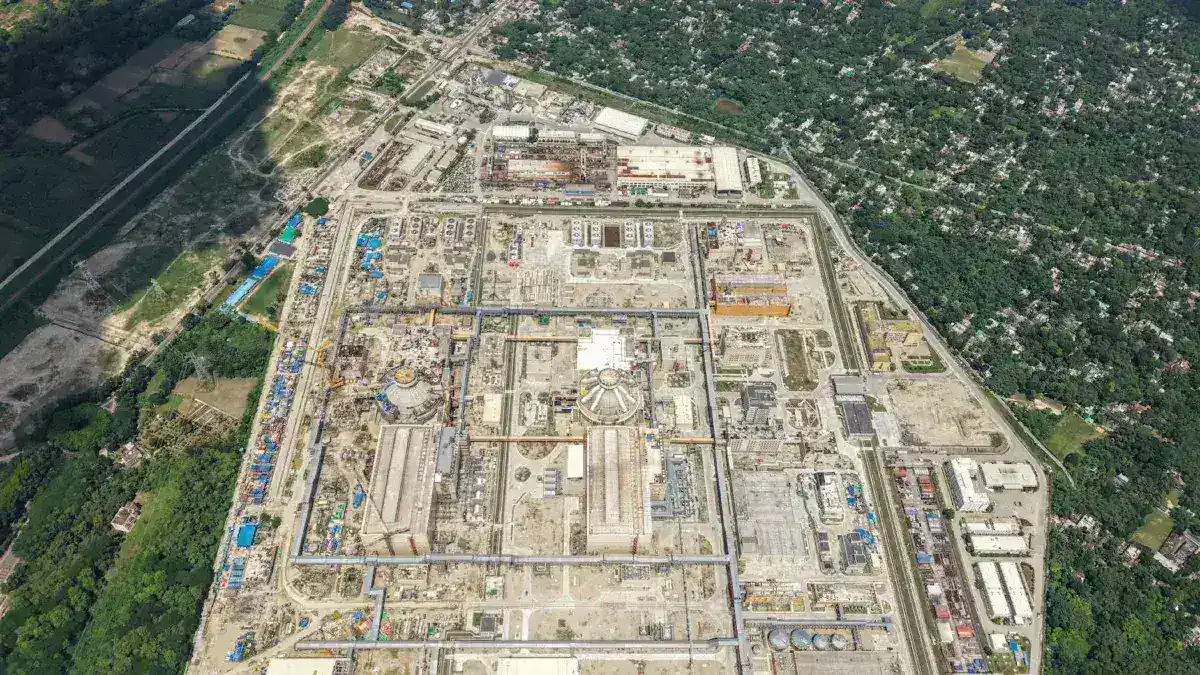
The Indian government is reportedly moving to significantly reduce the sterile zones around its nuclear power reactors, a strategic shift aimed at freeing up valuable land for development and accelerating the expansion of its nuclear energy program, according to sources familiar with the matter. This pivotal decision, coupled with an increasing openness to private investment and ambitious plans for mass-producing small modular reactors (SMRs), signals a transformative moment for India’s energy future as it seeks to meet soaring power demands and achieve its climate goals.
Context: Powering a Growing Nation
India, a rapidly developing nation, faces an ever-growing demand for electricity to sustain its economic growth and rising population. While the country has historically relied heavily on fossil fuels, particularly coal, there is a strong and urgent push towards cleaner energy sources to address environmental concerns and enhance energy independence. Nuclear power currently contributes a modest share to India’s energy mix, with an installed capacity of approximately 7.5 GW from 23 operational reactors.
Historically, the development of nuclear power in India has been a state-controlled endeavor, with the Department of Atomic Energy (DAE) and the Nuclear Power Corporation of India Ltd (NPCIL) leading all initiatives. Stringent safety regulations, including a mandated 5-kilometer sterile zone around reactors, have been a hallmark of this approach. While ensuring safety, these large exclusion zones have often led to significant land acquisition challenges and limited surrounding development.
Shrinking Exclusion Zones to Unlock Land
The proposed reduction of the sterile zone from the current 5-kilometer radius to a more compact 1.5 kilometers represents a significant policy adjustment. This change is reportedly justified by advancements in reactor safety technology and an alignment with international best practices, where such extensive exclusion zones are not a universal standard. Sources indicate that this policy adjustment is undergoing final review and could be implemented soon, potentially unlocking vast tracts of land that were previously restricted.
The freed-up land could be utilized for industrial, commercial, or residential development, contributing significantly to local economies around nuclear sites. This move is expected to streamline future project developments and reduce the land-related complexities that have often delayed infrastructure projects in the past.
Opening Doors to Private Investment
Concurrently, India is actively encouraging private sector participation in its nuclear energy sector, a stark departure from its long-standing state monopoly. This shift is crucial for mobilizing the substantial capital required for the nation’s ambitious expansion plans. Companies like Adani Power have already demonstrated keen interest, reportedly lining up land and establishing Special Purpose Vehicles (SPVs) for potential nuclear projects.
This private sector engagement is expected to bring in new technologies, enhance efficiency, and inject much-needed investment, accelerating project timelines and reducing the financial burden on the state. However, the exact framework for private involvement, particularly concerning liability in the event of an accident, remains a critical area of discussion and policy refinement, as highlighted by expert analysis from institutions like the Bulletin of the Atomic Scientists.
A Roadmap for Mass-Producing Small Modular Reactors
Further bolstering India’s nuclear ambitions is a clear roadmap for the mass production of Small Modular Reactors (SMRs). SMRs, characterized by their smaller footprint, modular design, and potentially faster construction times, are seen as a game-changer in the global energy landscape. Their inherent safety features and ability to be deployed in diverse locations make them particularly attractive for decentralized power generation.
The focus on SMRs complements the sterile zone reduction, as these compact reactors might require even less land, making nuclear power a more flexible and scalable option for India’s future energy landscape. This strategic push positions India to become a leader in SMR deployment, potentially developing a robust indigenous supply chain and export capabilities.
Expert Perspectives and Ambitious Targets
India aims to significantly increase its nuclear power capacity, targeting 22.5 GW by 2031, a substantial leap from its current capacity. This ambitious goal necessitates a multifaceted approach, including regulatory streamlining and robust private sector involvement. An unnamed expert close to the Department of Atomic Energy reportedly stated, “The move to shrink exclusion zones aligns with global trends where advanced safety systems allow for smaller footprints,” emphasizing that “safety remains paramount.”
Data from the International Atomic Energy Agency (IAEA) also shows varying exclusion zone requirements globally, suggesting India’s proposed changes are not unprecedented. The involvement of major industrial players like Adani underscores the growing confidence in the sector’s potential and the government’s commitment to creating an attractive investment environment.
Implications and What to Watch Next
These policy shifts carry profound implications for India’s energy future. The combined effect of smaller exclusion zones, increased private investment, and SMR deployment could significantly accelerate India’s transition towards a cleaner energy grid, reducing its reliance on fossil fuels and contributing to its climate change commitments. It opens up substantial opportunities for private enterprises, both domestic and international, to participate in a rapidly growing sector.
However, careful regulatory oversight will be critical to ensure that safety standards are not compromised in the pursuit of faster development. Public engagement and transparent communication will also be vital to build trust and acceptance for nuclear projects, especially as residential and commercial developments could potentially emerge closer to reactor sites. The next steps will involve the formalization of these policy changes, the announcement of specific private sector projects, and the development of a robust regulatory framework that balances innovation with unyielding safety. The world will be watching closely as India charts a new course for its nuclear power journey.