









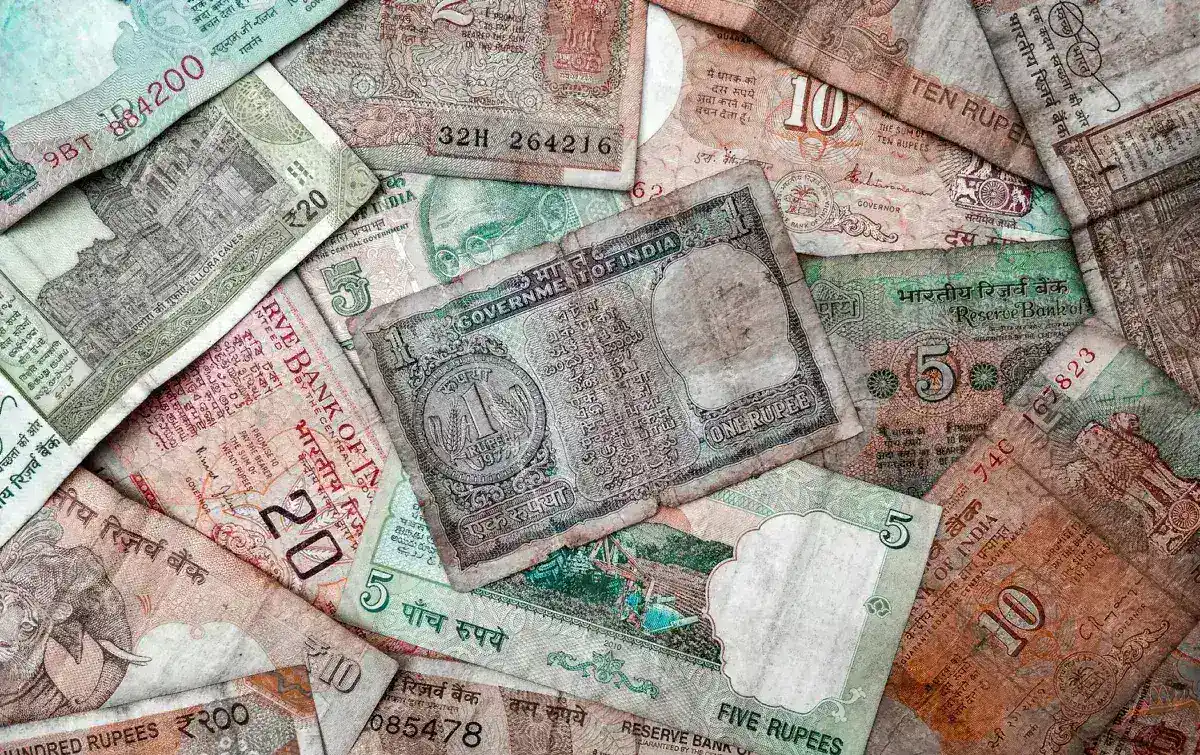
The Indian Rupee recently plummeted to a record low against the US Dollar, closing at 95.31, its sharpest monthly decline, driven primarily by a significant spike in gold-linked dollar demand and persistent upward pressure from surging crude oil prices, prompting active intervention by the Reserve Bank of India (RBI) in the domestic currency market.
Context Behind the Currency Volatility
India, a major importer of both crude oil and gold, sees its currency’s value significantly influenced by global commodity prices and domestic demand for these assets. A stronger US dollar globally, often fueled by rising US interest rates or safe-haven demand, typically puts depreciatory pressure on emerging market currencies like the Rupee.
The Reserve Bank of India consistently monitors the Rupee’s trajectory, often intervening in the foreign exchange market to curb excessive volatility. Such interventions usually involve selling US dollars from its reserves to increase dollar supply and stabilize the Rupee, aiming to prevent sharp, disruptive movements that could impact trade and inflation.
The Recent Plunge: Factors at Play
The Rupee’s recent depreciation saw it crash by 0.9% in a single day, marking a fall of 139 paise to reach 95.31 against the US dollar. This substantial movement represents its weakest close on record.
A primary catalyst for this sharp decline was a notable surge in gold-linked dollar demand. This demand often intensifies during festive seasons or periods of economic uncertainty when gold is perceived as a safe haven asset. Importers purchasing gold require US dollars, thereby increasing demand for the greenback and weakening the Rupee.
Compounding this pressure were surging crude oil prices. As India imports a substantial portion of its oil, higher global crude benchmarks translate directly into a larger dollar outflow for oil payments. This increased demand for dollars for oil imports further exacerbates the Rupee’s vulnerability.
Market participants, particularly currency traders, widely reported the Reserve Bank of India’s likely intervention. Traders indicated that the RBI was selling dollars to limit the Rupee’s fall, a common strategy employed by the central bank to manage currency stability.
Expert Perspectives and Market Sentiment
Currency analysts note that while RBI intervention can temper immediate volatility, the underlying demand-supply dynamics for dollars remain critical. Sustained high crude oil prices and robust domestic gold demand pose ongoing challenges for the Rupee.
Economists emphasize that the global strength of the US dollar, driven by factors such as the Federal Reserve’s monetary policy and geopolitical events, also plays a crucial role. A strong Dollar Index (DXY) tends to put pressure on all emerging market currencies.
Reports from financial news outlets highlighted the intensity of the selling pressure, with one report citing an 82-paise crash to the all-time low. This rapid depreciation underscores the fragility of market sentiment in the face of multiple adverse factors.
Some market observers also point to potential outflows from foreign institutional investors (FIIs) as another contributing factor, as higher US interest rates might make dollar-denominated assets more attractive compared to emerging market equities or debt.
Implications for the Economy and Consumers
A weakening Rupee has broad implications across the Indian economy. For consumers, it typically translates to higher costs for imported goods, including electronics, luxury items, and, most critically, fuel. This can fuel inflationary pressures, eroding purchasing power.
Businesses heavily reliant on imports face increased operational costs, potentially impacting profitability and investment decisions. Sectors like manufacturing, which depend on imported raw materials or components, are particularly vulnerable.
Conversely, exporters might see a temporary boost as their goods become cheaper for international buyers. However, this advantage can be offset by higher input costs if their production relies on imported components, or by global economic slowdowns impacting overall demand.
The RBI faces a delicate balancing act. While intervening to stabilize the Rupee, it must also manage its foreign exchange reserves judiciously. Persistent intervention can deplete reserves, limiting the central bank’s future capacity to respond to crises.
What to Watch Next
Investors and policymakers will closely monitor several key indicators in the coming weeks. The trajectory of global crude oil prices remains a critical determinant for the Rupee. Any sustained decline in oil prices could offer some respite.
The Reserve Bank of India’s monetary policy stance and its continued actions in the foreign exchange market will also be under scrutiny. Any clear signals about its intervention strategy or broader economic outlook will be keenly watched.
Furthermore, global financial flows, particularly the actions of foreign institutional investors, will influence the Rupee’s stability. Any shifts in global risk sentiment or changes in the US Federal Reserve’s interest rate policy could trigger further capital movements.
Domestic demand for gold, especially as India approaches peak festive and wedding seasons, will continue to be a factor. Any moderation in gold import demand could ease some of the pressure on the Rupee.