









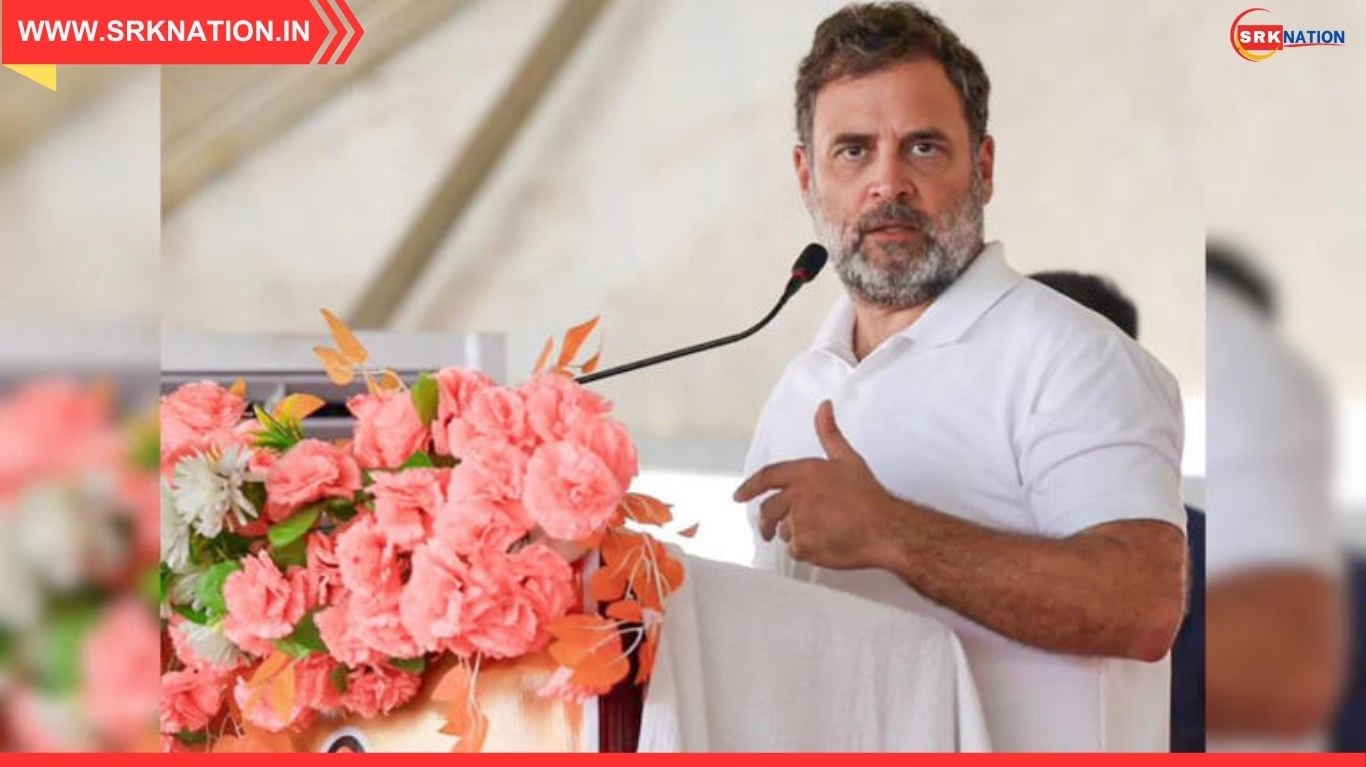
Congress MP Rahul Gandhi has ignited a fresh political controversy during a campaign rally in Kutumba, Bihar, by claiming that “10% of India’s population controls the Army,” a statement widely interpreted as a reference to the country’s upper castes. The remark, made on November 4, 2025, just days before the first phase of the Bihar Assembly elections, has drawn sharp criticism from the Bharatiya Janata Party (BJP) and other political opponents, who have accused Gandhi of undermining the integrity of the armed forces and stoking caste-based divisions.
Addressing a large gathering, Gandhi said, “Only 10% of the country’s population—those from upper castes—control the Army, the corporate sector, the judiciary, and the bureaucracy. The remaining 90%—Dalits, backward classes, tribals, and minorities—are kept outside the system.” He reiterated his long-standing demand for a nationwide caste census to ensure equitable representation in all institutions of power.
🧠 Key Highlights of Rahul Gandhi’s Bihar Rally Statement
| Statement Segment | Interpretation and Political Impact |
|---|---|
| “10% control the Army” | Seen as a reference to upper caste dominance |
| “90% are outside the system” | Emphasizes exclusion of marginalized groups |
| “We need a caste census” | Reaffirms Congress’s push for social justice |
This is the first time Gandhi has explicitly linked the Indian Army to caste-based representation debates.
📊 Timeline of the Controversy
| Date | Event Description | Stakeholder Involved |
|---|---|---|
| Nov 4, 2025 | Rahul Gandhi makes statement in Kutumba, Bihar | Congress |
| Nov 4, 2025 | BJP, JD(U) leaders condemn remarks | NDA |
| Nov 5, 2025 | Congress defends Gandhi, calls for caste census | Congress |
| Nov 6, 2025 | First phase of Bihar Assembly elections | Election Commission of India |
The timing of the remark has added fuel to an already heated election campaign in Bihar.
📈 Political Reactions Across the Spectrum
| Political Party/Leader | Response Summary |
|---|---|
| BJP (Amit Malviya) | “Rahul Gandhi has insulted the Indian Army.” |
| JD(U) (Nitish Kumar) | “Such divisive politics will not be tolerated.” |
| Congress (Jairam Ramesh) | “Rahul is speaking for the voiceless.” |
| RJD (Tejashwi Yadav) | “We support the demand for caste census.” |
The BJP has accused Gandhi of politicizing the armed forces, while allies in the INDIA bloc have backed his call for a caste census.
📌 Caste Representation in Indian Institutions – A Snapshot
| Institution | Dominant Representation (as per social activists) | Underrepresented Groups |
|---|---|---|
| Indian Army | Upper castes (as per Gandhi’s claim) | OBCs, SCs, STs, minorities |
| Bureaucracy (IAS/IPS) | General category | SC/ST/OBC |
| Judiciary | Upper castes | Marginalized communities |
| Corporate Sector | Urban elite, upper castes | Rural, backward class groups |
While official data on caste representation in the Army is not publicly available, Gandhi’s remarks have reignited calls for transparency.
📌 Strategic Implications for Bihar Elections
| Voter Segment | Likely Impact of Gandhi’s Remark |
|---|---|
| OBCs and Dalits | May resonate with demand for representation |
| Upper Castes | Could trigger backlash against Congress |
| Youth and First-Time Voters | Mixed reactions based on regional affiliations |
| Women Voters | Less likely to be swayed by caste-centric rhetoric |
The statement may consolidate support among backward communities but risks alienating upper caste voters.
📌 Conclusion
Rahul Gandhi’s controversial statement in Bihar, asserting that 10% of India’s population controls the Army and other key institutions, has sparked a political storm just ahead of the state’s crucial Assembly elections. While the Congress defends the remark as a call for social justice and equitable representation, critics argue it undermines national institutions and promotes divisive politics. As Bihar heads into the first phase of polling, the fallout from Gandhi’s statement is likely to influence voter sentiment and campaign narratives across party lines.
Disclaimer: This article is based on publicly available political statements, media reports, and election coverage. It is intended for informational and editorial purposes only and does not constitute political endorsement or legal advice.



Your article helped me a lot, is there any more related content? Thanks! https://www.binance.com/register?ref=IHJUI7TF