








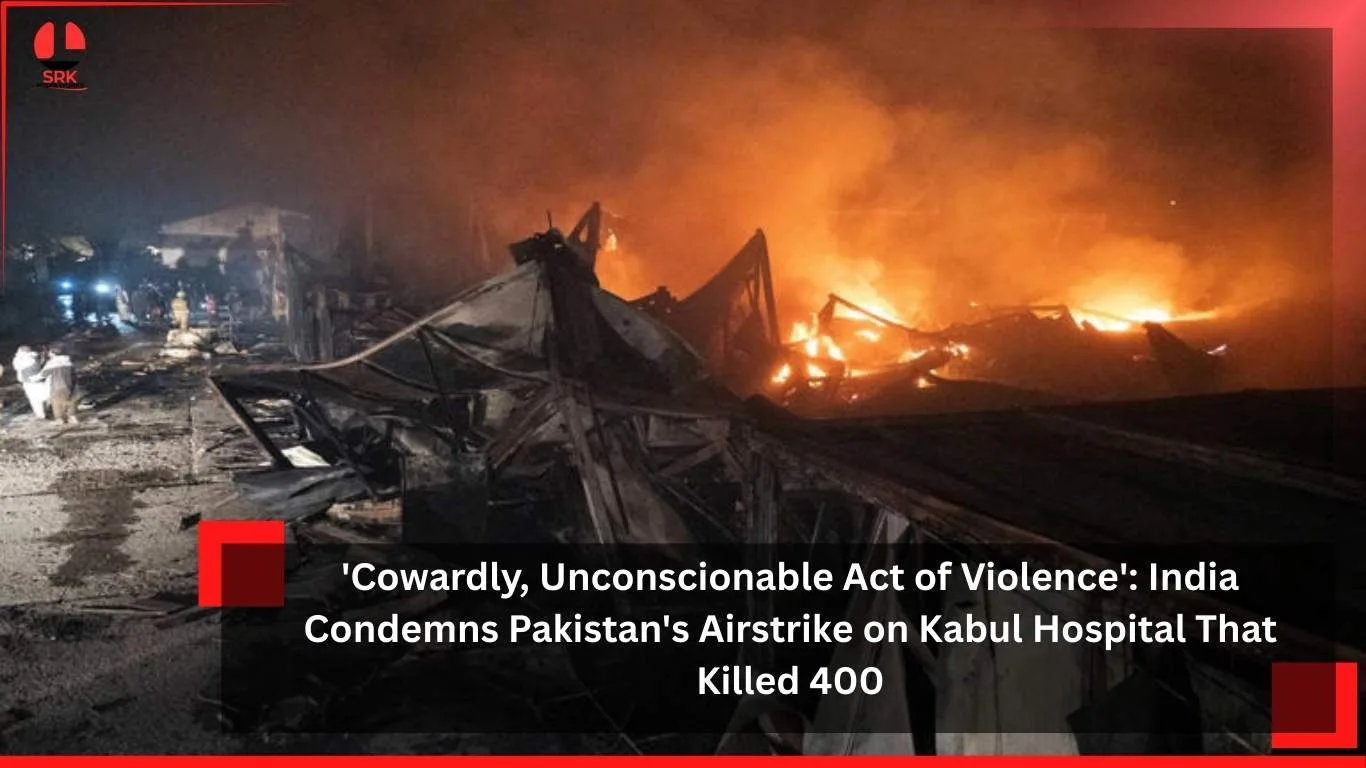
India has strongly condemned Pakistan’s reported airstrike on a hospital in Kabul that left nearly 400 people dead, calling it a “cowardly and unconscionable act of violence.” The incident has triggered global outrage, with governments, humanitarian organizations, and civil society groups demanding accountability for the attack on civilians.
Background of the Incident
According to reports, Pakistan carried out an airstrike targeting what it claimed were militant hideouts in Kabul. However, the strike hit a hospital, resulting in catastrophic civilian casualties. The death toll of 400, including women, children, and medical staff, has made this one of the deadliest single attacks in recent years.
India’s Ministry of External Affairs issued a statement condemning the strike, emphasizing that hospitals are protected spaces under international law and that targeting them constitutes a war crime.
India’s Response
India’s condemnation was swift and unequivocal:
- Moral Standpoint: India described the attack as “cowardly and unconscionable,” highlighting the deliberate targeting of vulnerable civilians.
- Diplomatic Pressure: Calls for international investigation and accountability were made.
- Humanitarian Concern: India stressed the importance of protecting medical facilities and ensuring aid reaches victims.
Global Reactions
United Nations
The UN expressed deep concern, urging restraint and calling for an impartial investigation.
United States
Washington condemned the attack, labeling it a violation of humanitarian law.
European Union
EU leaders demanded accountability and stressed the need for protecting civilian infrastructure.
Regional Neighbors
Countries in South Asia voiced alarm, fearing escalation of violence across borders.
Humanitarian Impact
The strike devastated Kabul’s healthcare system:
- Casualties: Nearly 400 dead, hundreds injured.
- Medical Collapse: Loss of doctors, nurses, and critical equipment.
- Psychological Trauma: Survivors face long-term emotional scars.
- Aid Challenges: Relief efforts hampered by security concerns.
Comparative Analysis of Reactions
| Stakeholder | Reaction | Implication |
|---|---|---|
| India | Strong condemnation | Push for accountability |
| United Nations | Call for investigation | Possible international inquiry |
| United States | Condemnation | Diplomatic pressure on Pakistan |
| European Union | Demand for justice | Strengthened humanitarian stance |
| Regional Neighbors | Alarm and concern | Fear of regional instability |
Pivot Analysis of Strategic Impact
| Dimension | Pakistan’s Position | India’s Position | Global Impact |
|---|---|---|---|
| Military | Justification of strike | Condemnation | Heightened tensions |
| Diplomatic | Defensive stance | Push for accountability | Polarized global opinion |
| Humanitarian | Civilian casualties | Advocacy for victims | Global outrage |
| Political | Domestic narrative | Regional leadership role | Increased scrutiny |
Historical Context
Attacks on hospitals have historically been condemned worldwide. From Syria to Yemen, such incidents have been classified as war crimes under international law. India’s strong condemnation aligns with its consistent stance on protecting civilians and upholding humanitarian principles.
Possible Scenarios
- International Inquiry: The UN may initiate an investigation into the strike.
- Diplomatic Fallout: Pakistan could face sanctions or isolation.
- Escalation: Rising tensions between India and Pakistan may spill into broader conflict.
- Humanitarian Crisis: Kabul’s healthcare system may collapse further, worsening civilian suffering.
Conclusion
India’s condemnation of Pakistan’s airstrike on Kabul hospital reflects both humanitarian concern and geopolitical positioning. The attack, which killed 400 civilians, has drawn global outrage and renewed calls for accountability under international law. As the world reacts, the incident underscores the urgent need to protect civilian infrastructure and prevent further escalation in the region.
Disclaimer
This article is based on reports and political statements regarding the alleged airstrike on Kabul hospital. The details of the incident remain unverified, and interpretations are subject to change as new information emerges. The content is intended for informational and analytical purposes only, not as definitive evidence of events.