







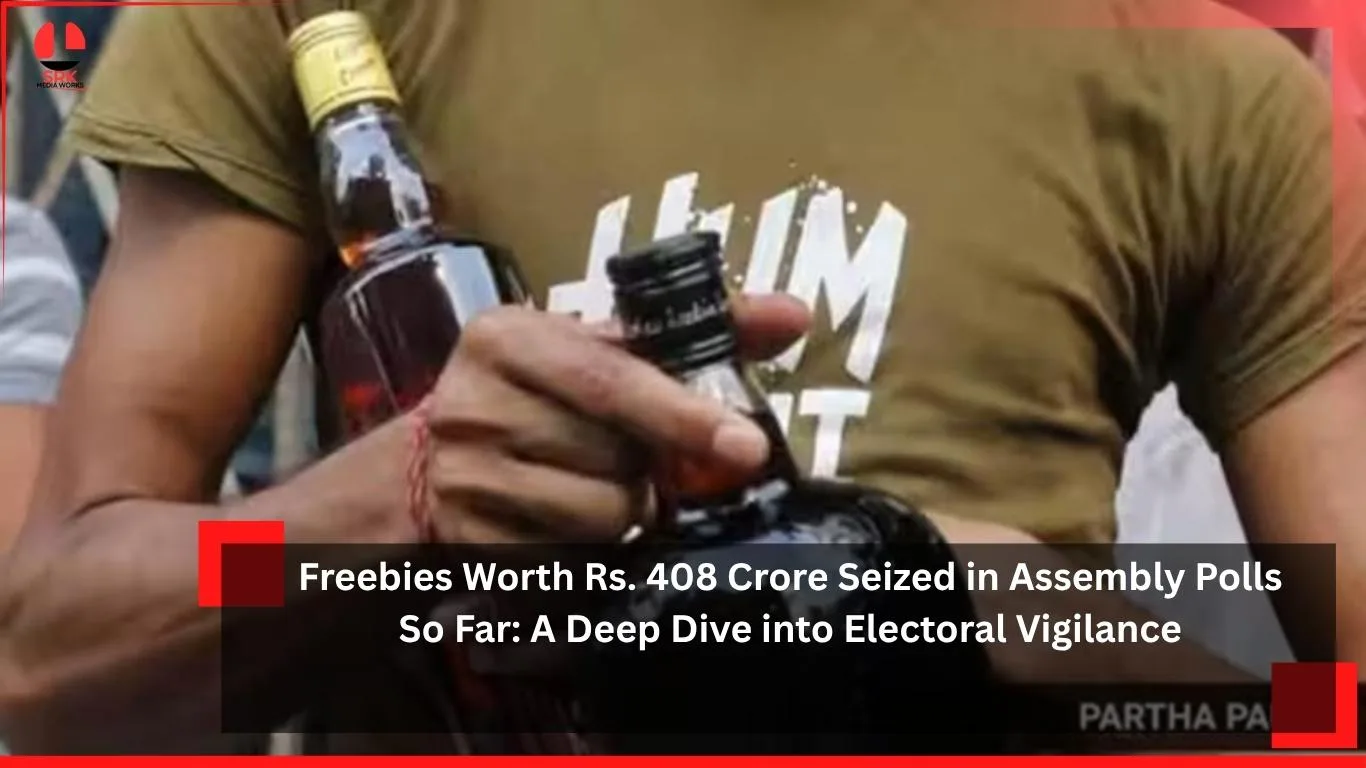
The ongoing assembly elections have witnessed an unprecedented crackdown on illegal inducements, with authorities seizing freebies worth Rs. 408 crore across multiple states. This massive haul underscores the Election Commission’s intensified efforts to ensure free and fair polls, curbing attempts to sway voters through cash, liquor, gold, and consumer goods.
The Scale of Seizures
The figure of Rs. 408 crore reflects a significant escalation compared to previous election cycles. Officials attribute this to enhanced surveillance, stricter enforcement, and the deployment of advanced monitoring technologies.
- Cash seizures: Large sums of unaccounted money intended for distribution among voters.
- Liquor: Thousands of bottles confiscated from warehouses and transport vehicles.
- Gold and jewelry: High-value items intercepted, suspected to be used as inducements.
- Consumer goods: Freebies such as electronic appliances, clothing, and food packets seized in bulk.
State-Wise Breakdown of Seizures
| State | Value of Seizures (Rs. Crore) | Major Items Confiscated |
|---|---|---|
| Tamil Nadu | 120 | Cash, gold, liquor |
| Andhra Pradesh | 95 | Liquor, consumer goods |
| Telangana | 80 | Cash, electronic appliances |
| Karnataka | 60 | Liquor, cash |
| Other States | 53 | Mixed items |
| Total | 408 | Cash, liquor, gold, goods |
Pivot Analysis: Enforcement vs Electoral Integrity
| Enforcement Measure | Impact on Elections | Challenges Faced |
|---|---|---|
| Cash Seizures | Prevents direct voter inducement | Hidden transactions persist |
| Liquor Raids | Reduces influence of alcohol bribery | Smuggling across borders |
| Gold & Jewelry Confiscation | Stops high-value inducements | Difficulty in tracing ownership |
| Consumer Goods Seizures | Limits mass distribution of freebies | Identifying disguised consignments |
Election Commission’s Strategy
The Election Commission has adopted a multi-pronged approach:
- Flying Squads: Rapid-response teams deployed across constituencies.
- Static Surveillance Units: Checkpoints established to monitor movement of goods and cash.
- Technology Integration: Use of GPS tracking, drones, and digital reporting systems.
- Coordination with Police and Tax Authorities: Ensuring swift action against violators.
Political Reactions
- Ruling Parties: Claim the seizures demonstrate their commitment to clean elections.
- Opposition Parties: Accuse ruling governments of selective targeting.
- Civil Society: Welcomes the crackdown but calls for greater transparency in reporting.
Impact on Voter Behavior
While seizures prevent direct inducements, experts argue that the practice of distributing freebies remains deeply entrenched. Voters in some regions expect material benefits during elections, making enforcement a challenging task. However, the crackdown sends a strong message that authorities are serious about maintaining electoral integrity.
Historical Comparison
In previous elections, seizures were significantly lower, often ranging between Rs. 150–200 crore. The current figure of Rs. 408 crore highlights both the scale of inducements attempted and the improved vigilance mechanisms in place.
Challenges Ahead
- Hidden Transactions: Despite seizures, covert inducements through digital transfers and informal networks remain difficult to detect.
- Legal Loopholes: Some items are disguised as legitimate consignments, complicating enforcement.
- Public Perception: Ensuring voters understand the importance of rejecting inducements is crucial.
Conclusion
The seizure of freebies worth Rs. 408 crore during assembly polls marks a watershed moment in India’s electoral vigilance. It reflects both the scale of attempts to influence voters and the determination of authorities to uphold democratic principles. As elections progress, the challenge will be to sustain this momentum and ensure that the sanctity of the ballot remains uncompromised.
Disclaimer
This article is based on publicly available information and expert commentary. It is intended for informational purposes only and does not represent official government data or certified figures. Readers should interpret the content as journalistic analysis, recognizing that electoral developments are dynamic and subject to change.