








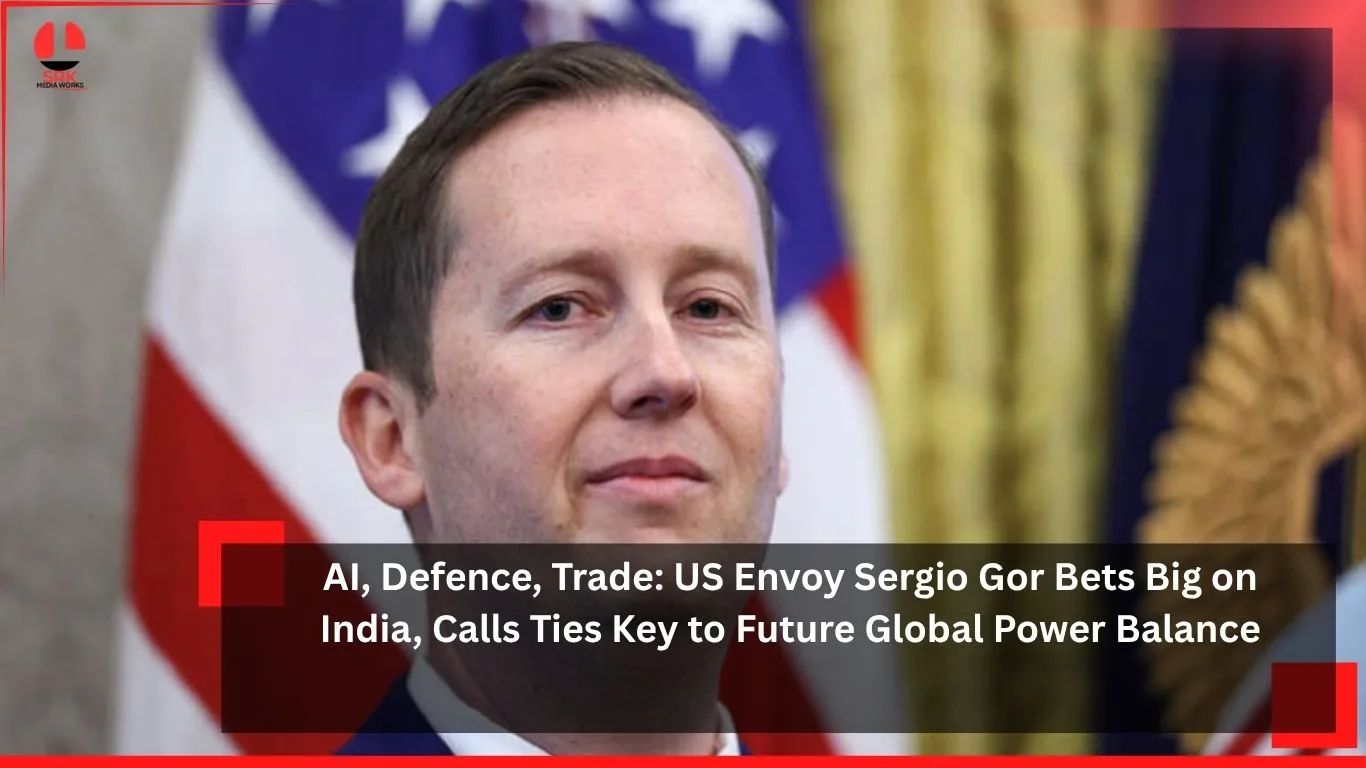
The US–India relationship has entered a new phase of strategic depth, with American envoy Sergio Gor highlighting artificial intelligence (AI), defence cooperation, and trade expansion as the three pillars of bilateral engagement. Speaking at high-level forums in New Delhi, Gor described the partnership as “key to the future global power balance,” underscoring Washington’s commitment to India as a central ally in shaping the 21st-century order.
AI Collaboration: Building Digital Corridors
Artificial intelligence has emerged as a defining technology of the future, and Gor emphasized its role in strengthening US–India ties.
- Joint Research: Universities and tech firms from both nations are collaborating on AI-driven healthcare, cybersecurity, and climate solutions.
- Digital Corridors: Plans are underway to establish secure digital corridors for data exchange.
- Ethical AI: Both countries are working on frameworks to ensure AI development aligns with democratic values.
Defence Cooperation: Strategic Depth
Defence remains a cornerstone of the partnership. Gor highlighted ongoing projects and future ambitions:
- Joint Exercises: Regular naval and air force drills in the Indo-Pacific.
- Technology Transfers: Advanced defence technologies being shared under new agreements.
- Supply Chain Security: Efforts to reduce dependence on adversarial nations for critical defence components.
Trade Expansion: Unlocking Economic Potential
Trade between the US and India has reached record highs, and Gor stressed the need for deeper integration.
| Sector | Current Trade Value (USD Billion) | Growth Potential |
|---|---|---|
| Energy | 15 | High (renewables, LNG) |
| Technology | 20 | Very High (AI, semiconductors) |
| Defence | 10 | High (joint production) |
| Agriculture | 8 | Moderate |
| Pharmaceuticals | 12 | High |
The envoy noted that trade diversification will be crucial for both economies, particularly in renewable energy and advanced technology.
Comparative Analysis: US–India vs Other Partnerships
| Partnership | Focus Areas | Strategic Importance |
|---|---|---|
| US–India | AI, defence, trade | Global power balance |
| US–Japan | Defence, technology | Indo-Pacific security |
| US–EU | Trade, climate, regulation | Transatlantic stability |
| US–Australia | Defence, minerals | Regional balance |
This comparison shows how India’s role is unique, combining economic scale with strategic geography.
Global Power Balance: Why India Matters
Gor’s remarks reflect a broader recognition in Washington: India is not just a regional player but a global force.
- Demographic Advantage: India’s young workforce is central to global supply chains.
- Geopolitical Position: India’s location in the Indo-Pacific makes it vital for maritime security.
- Economic Scale: India is projected to be the world’s third-largest economy by 2030.
Challenges Ahead
Despite optimism, Gor acknowledged challenges:
- Regulatory Barriers: Trade policies need harmonization.
- Technology Gaps: Bridging differences in standards and infrastructure.
- Geopolitical Risks: Managing tensions in South Asia and the Indo-Pacific.
Conclusion
Sergio Gor’s emphasis on AI, defence, and trade highlights the evolving nature of US–India ties. His assertion that the partnership is “key to the future global power balance” reflects a strategic bet on India’s rise. As both nations deepen cooperation, the world will watch closely how this alliance shapes technology, security, and commerce in the decades ahead.
Disclaimer
This article is based on publicly available information, diplomatic statements, and policy analysis. It is intended for informational purposes only and does not constitute financial, legal, or professional advice. Readers should verify details independently and consult experts for specific guidance.