








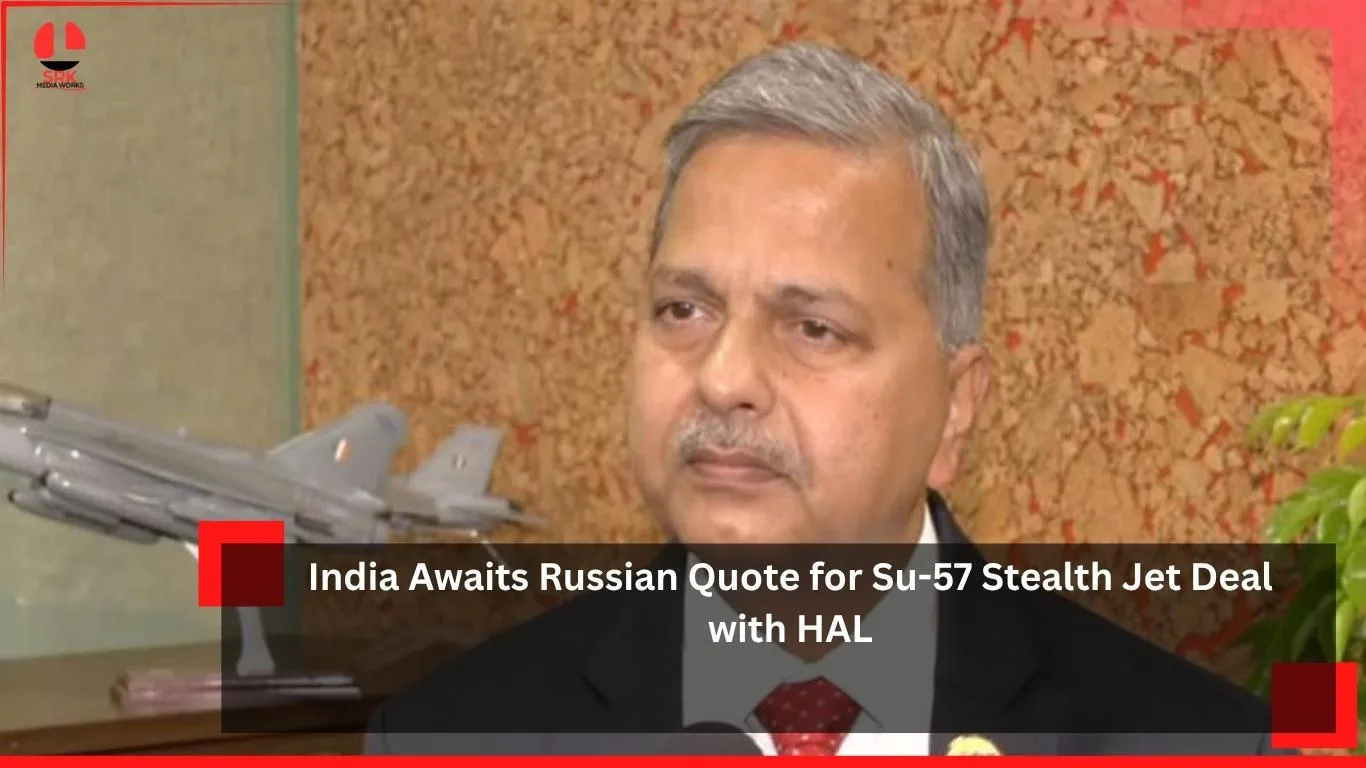
India’s Hindustan Aeronautics Limited (HAL) is awaiting a formal investment quotation from Russia for the Su-57 fifth-generation stealth fighter jet deal. The discussions include potential licensed production in India, with Russia offering advanced variants, including a two-seat Su-57 capable of controlling drones. This deal could significantly reshape India’s air power in the Indo-Pacific.
Background of the Su-57 Deal
- HAL’s Role: HAL Chairman & Managing Director Dr. DK Sunil confirmed that Russian delegations have assessed Indian facilities, noting that nearly half of HAL’s infrastructure could be utilized for production.
- Awaiting Quotation: India is waiting for Russia’s investment quote before finalizing production numbers and timelines.
- Strategic Importance: The Su-57 is Russia’s most advanced stealth fighter, designed to rival U.S. F-22 and F-35 jets.
Russia’s Offer to India
- Two-Seat Variant: Russia has offered India a two-seat Su-57 variant equipped to control swarming drones, enhancing survivability and strike capability.
- Technology Transfer: Moscow has indicated willingness to provide full technology transfer, strengthening India’s defense manufacturing ecosystem.
- Indo-Pacific Balance: Analysts believe the deal could tilt the balance of air power in the region.
Comparative Analysis of Fighter Jet Options
| Aircraft | Country | Key Features | India’s Interest |
|---|---|---|---|
| Su-57 | Russia | Stealth, drone control, two-seat option | Awaiting quotation |
| F-35 Lightning II | USA | Stealth, advanced sensors, global network | Limited due to cost & politics |
| AMCA (Future) | India | Indigenous stealth project | Under development |
| Rafale | France | 4.5-gen fighter, proven combat record | Already inducted |
Sector-Wise Impact of Su-57 Deal
| Sector | Impact Level | Key Benefits |
|---|---|---|
| Defense Capability | Very High | Enhanced stealth and strike power |
| Industry | High | Boost to HAL and indigenous production |
| Diplomacy | High | Strengthened India-Russia ties |
| Economy | Medium | Investment in aerospace infrastructure |
| Regional Security | Very High | Shift in Indo-Pacific air balance |
Analytical Pivot
| Year | India’s Fighter Jet Acquisition | Strategic Impact | Global Perception |
|---|---|---|---|
| 2024 | Rafale fleet expansion | Strengthened air dominance | Positive |
| 2025 | AMCA development phase | Indigenous capability building | Neutral |
| 2026 | Awaiting Su-57 quotation | Potential leap in stealth tech | High interest |
Challenges Ahead
- Cost Concerns: The Su-57 program is expensive, and India must weigh affordability.
- Technology Integration: Ensuring compatibility with existing systems will be crucial.
- Geopolitical Risks: U.S. sanctions under CAATSA could complicate procurement.
Future Outlook
If finalized, the Su-57 deal could mark a turning point in India’s defense modernization. Licensed production in India would not only boost HAL’s capabilities but also strengthen India’s position as a defense manufacturing hub. The two-seat variant with drone control could give India a unique edge in future warfare.
Conclusion
India’s wait for Russia’s investment quotation on the Su-57 stealth jet deal reflects the seriousness of ongoing negotiations. With HAL prepared to utilize existing infrastructure and Russia offering advanced variants, the partnership could redefine India’s air power. The coming months will be critical in determining whether India secures this fifth-generation fighter to bolster its strategic edge.
Disclaimer
This article is intended for informational purposes only. The content reflects current defense developments and analysis based on publicly available information. Readers should not interpret this as official policy guidance or procurement advice. While accuracy has been prioritized, future developments may alter the situation. Independent verification is recommended before drawing conclusions.