

Incident Overview
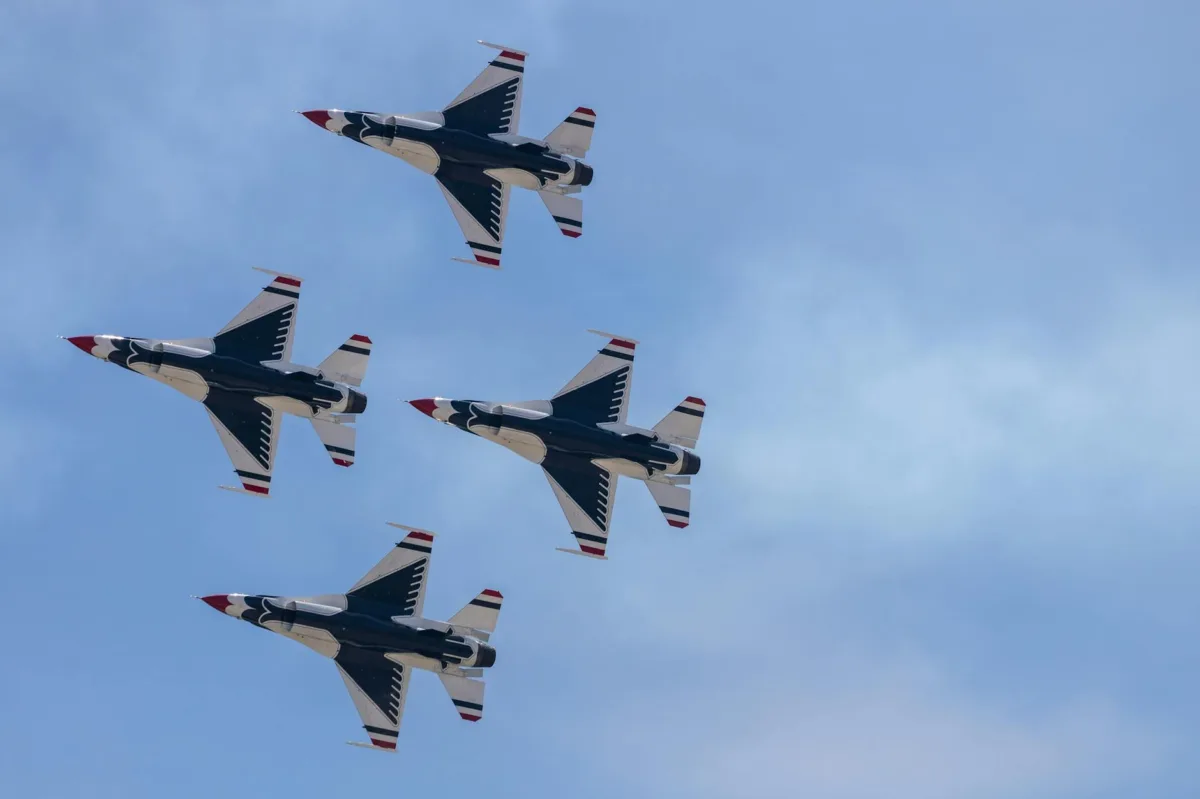
Four U.S. Navy crew members safely ejected from their aircraft on Saturday afternoon after two jets collided during an aerial demonstration at an air show in Idaho. Emergency response teams reached the crash site shortly after the incident, and officials confirmed that all personnel involved were recovered without life-threatening injuries.
Context and Safety Protocols
Air shows are highly choreographed events that require strict adherence to FAA regulations and military flight safety standards. Despite these rigorous protocols, the complexity of high-speed aerial maneuvers carries inherent risks that necessitate rapid-response emergency ejection systems.
Details of the Collision
The collision occurred during a formation flight sequence, a staple of military aviation demonstrations designed to showcase precision and pilot coordination. Witnesses on the ground reported hearing a loud bang followed by the activation of ejection seats as the aircraft began to descend away from the populated viewing area.
Military spokespersons stated that the primary objective during the immediate aftermath was the rapid location and medical evaluation of the aircrews. The event was promptly terminated as base security and local emergency services secured the perimeter to facilitate the search and rescue operation.
Expert Perspectives
Aviation safety experts note that the successful ejection of all four crew members is a testament to the reliability of modern Martin-Baker ejection seat technology. Dr. Marcus Thorne, an aviation safety consultant, observed that the ability to initiate an emergency sequence during a mid-air malfunction is the final, critical layer of defense in military flight.
“The survival of these crew members highlights the effectiveness of training and equipment maintenance,” said Thorne. “In high-performance aviation, seconds determine the difference between a tragic outcome and a successful recovery.”