








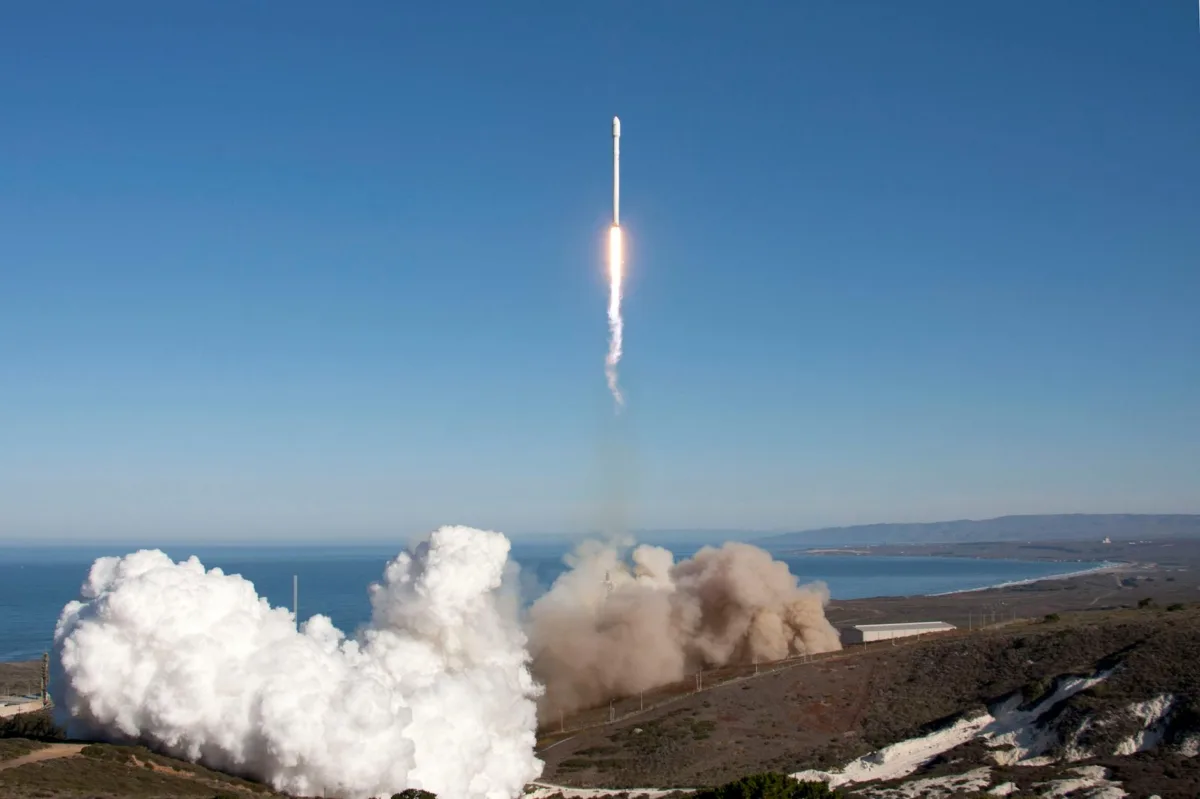
China successfully launched the Shenzhou-23 spacecraft from the Jiuquan Satellite Launch Center in the Gobi Desert early Wednesday, carrying three astronauts to the Tiangong space station. The mission marks a significant milestone in Beijing’s space program, as it includes the first-ever astronaut selected from the Hong Kong Special Administrative Region, signaling a broader push for national integration within the nation’s aerospace ambitions.
Expanding the Tiangong Footprint
The mission follows a series of successful crew rotations that have solidified China’s permanent presence in low Earth orbit. Since the completion of the Tiangong space station in 2022, China has maintained a continuous human presence, conducting a wide array of scientific experiments ranging from material science to biological research.
This particular mission is notable for its crew composition, which emphasizes the inclusion of talent from special administrative regions. By integrating a Hong Kong-based payload specialist, the China Manned Space Agency (CMSA) is diversifying its recruitment pool and fostering greater public interest in space exploration across its territories.
Technological Progress and Lunar Ambitions
The Shenzhou-23 launch is not merely a routine maintenance mission; it serves as a critical testbed for technologies intended for future lunar exploration. China has stated its intention to land astronauts on the moon by 2030, a goal that requires perfecting long-duration life support systems and advanced docking maneuvers currently being refined on the Tiangong platform.
According to data released by the CMSA, the station now serves as a multi-module laboratory capable of supporting complex international and domestic research projects. The current crew will spend several months aboard the orbiting outpost, overseeing hardware upgrades and conducting a series of extravehicular activities to install new experimental equipment.
Expert Perspectives on Strategic Growth
Aerospace analysts note that China’s rapid cadence of launches demonstrates a mature supply chain and a robust logistical framework. While the United States remains the leader in total spaceflight heritage, the efficiency with which China has built and populated its space station has caught the attention of the global scientific community.
“The inclusion of a Hong Kong astronaut is a strategic move that bolsters domestic support while demonstrating the technological maturity to train individuals outside the traditional military pilot pipeline,” said an analyst specializing in East Asian space policy. This shift highlights a transition from purely military-led space exploration toward a more diversified professional astronaut corps.
Future Implications for Global Space Competition
The successful deployment of the Shenzhou-23 crew suggests that China is well-positioned to maintain its current trajectory of station operations. For the global space industry, this underscores a competitive landscape where multiple nations are vying for technological dominance in low Earth orbit and beyond.
Observers are now watching for upcoming announcements regarding the next phase of the Tiangong expansion, which may include the addition of new modules or international cooperation agreements. As China moves closer to its 2030 lunar target, the frequency and complexity of these crewed missions are expected to increase, further testing the limits of the nation’s launch infrastructure and human spaceflight capabilities.