









The Directorate General of Civil Aviation (DGCA) has issued a comprehensive Standard Operating Procedure (SOP) for all airlines operating in India this week, mandating stringent health screenings for passengers arriving from Ebola-affected regions. This directive follows the World Health Organization’s (WHO) recent declaration of the Ebola outbreak as a global public health emergency, triggering heightened surveillance at major international transit hubs across the country.
Context and Global Response
Ebola, a severe viral hemorrhagic fever, has historically presented significant containment challenges due to its high transmission rate through direct contact with bodily fluids. The current global response is informed by previous outbreaks that necessitated rigorous international cooperation to prevent cross-border spread.
Aviation remains a critical vector for disease transmission, prompting regulatory bodies to prioritize frontline screening. By standardizing protocols, the DGCA aims to harmonize the response across private and public carriers, ensuring that cabin crews and ground staff are adequately equipped to identify and report potential cases.
Operational Shifts at Major Hubs
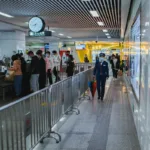
In response to the DGCA mandate, airports in cities such as Hyderabad, Vijayawada, and Ahmedabad have initiated enhanced screening procedures. These measures include thermal scanning and the collection of detailed travel histories for passengers arriving from affected African nations.
State health authorities are actively monitoring travelers who have recently returned from high-risk areas. In Hyderabad, officials confirmed that 58 individuals currently under home isolation are not exhibiting symptoms, providing a measure of reassurance to the public while maintaining a state of high vigilance.
Expert Perspectives and Data Integration
Public health experts emphasize that early detection is the cornerstone of epidemic control. Data from previous health crises suggests that rapid isolation protocols significantly reduce the probability of community transmission.
“The integration of aviation screening with local health department monitoring creates a critical barrier against imported cases,” noted a public health analyst. “The focus is currently on data accuracy and the swift communication of passenger manifests to regional surveillance teams.”
Industry and Public Implications
For the aviation industry, these SOPs represent an increase in operational complexity. Airlines are now tasked with maintaining real-time awareness of WHO-declared zones and adjusting cabin protocols accordingly to protect both passengers and crew members.
The traveling public should anticipate longer processing times at immigration and health checkpoints upon arrival from affected regions. While authorities have urged the public to avoid panic, the emphasis remains on transparency regarding travel history and adherence to isolation guidance if contacted by health officials.
Looking ahead, the sustainability of these measures will depend on the evolution of the outbreak in Africa and the effectiveness of international containment efforts. Monitoring agencies are expected to refine screening criteria weekly, while the aviation sector prepares for potential adjustments to international flight corridors should the risk profile change.