








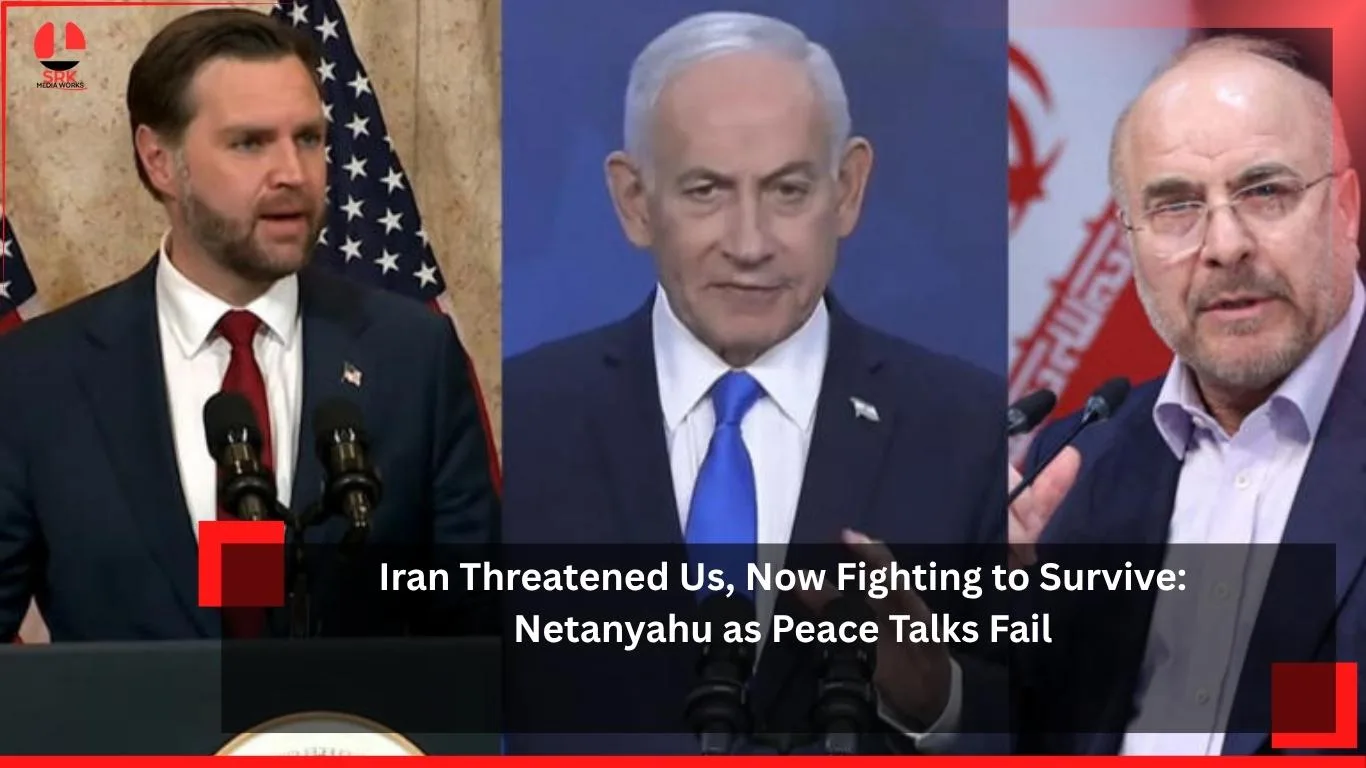
Israeli Prime Minister Benjamin Netanyahu has declared that Iran’s threats against Israel have left the nation “fighting to survive” after the latest round of peace talks collapsed without progress. The failure of negotiations has reignited tensions across West Asia, raising fears of escalation and further instability in the region.
Netanyahu’s Statement
Netanyahu, addressing the media after the breakdown of talks, accused Iran of undermining peace efforts by continuing to issue threats against Israel. He emphasized that Israel’s security remains non-negotiable and that the country will take all necessary measures to defend itself.
His remarks reflect Israel’s longstanding concerns about Iran’s nuclear ambitions and regional influence. Netanyahu’s framing of the situation as a fight for survival underscores the gravity with which Israel views the threat.
Collapse of Peace Talks
The latest round of peace talks, involving regional and international stakeholders, ended without agreement. Negotiators had hoped to ease tensions between Israel and Iran, but disagreements over nuclear programs, sanctions, and regional security proved insurmountable.
Diplomatic sources suggest that Iran’s insistence on sanctions relief and Israel’s demand for verifiable security guarantees created a deadlock.
Regional Reactions
The failure of talks has drawn varied responses across the region:
- Gulf States: Expressed concern about rising instability.
- United States: Called for renewed efforts but warned of consequences if Iran escalates.
- European Union: Urged restraint and dialogue despite setbacks.
- Iran: Accused Israel of sabotaging peace efforts, insisting its nuclear program is peaceful.
Comparative Analysis of Stakeholders
| Stakeholder | Position | Potential Gain | Potential Risk |
|---|---|---|---|
| Israel | Security guarantees | Survival, deterrence | Escalation of conflict |
| Iran | Sanctions relief | Economic stability | Isolation if talks fail |
| United States | Mediation role | Regional stability | Loss of credibility |
| European Union | Diplomatic push | Peaceful resolution | Limited influence |
| Gulf States | Observers | Stability | Spillover of conflict |
This comparison highlights the complex interplay of interests shaping the outcome of negotiations.
Pivot Analysis: Aftermath of Failed Talks
| Dimension | Before Talks | After Talks | Implications |
|---|---|---|---|
| Israel’s Security | Hope for guarantees | Renewed threats | Heightened vigilance |
| Iran’s Economy | Sanctions pressure | Continued isolation | Domestic strain |
| Regional Stability | Fragile | More uncertain | Risk of escalation |
| Global Perception | Hope for progress | Disappointment | Questions about diplomacy |
The pivot analysis shows how the collapse of talks reshapes regional and global dynamics.
Netanyahu’s Strategy
Netanyahu’s remarks suggest a hardening of Israel’s stance. By framing the situation as existential, he signals that Israel may adopt tougher measures, including military options, if diplomacy fails.
Iran’s Response
Iran has accused Israel of exaggerating threats and undermining peace efforts. Tehran insists that its nuclear program is peaceful and that sanctions must be lifted for meaningful progress.
Global Implications
The failure of talks may impact global energy markets, trade flows, and security alignments. Allies may question the viability of diplomacy, while adversaries could exploit the situation to expand influence.
Possible Outcomes
- Escalation: Israel adopts tougher measures, risking conflict.
- Renewed Diplomacy: Talks resume under new conditions, possibly with different mediators.
- Regional Realignment: Other powers, such as China or Russia, step in to mediate.
- Continued Stalemate: Sanctions remain, with no progress toward resolution.
Conclusion
Netanyahu’s declaration that Israel is “fighting to survive” after Iran’s threats and the collapse of peace talks underscores the fragility of diplomacy in West Asia. The failure of negotiations highlights deep mistrust and unresolved issues, leaving the region at risk of further instability. The coming months will reveal whether renewed efforts can salvage dialogue or whether confrontation becomes inevitable.
Disclaimer: This article is based on reported developments and diplomatic analysis. It does not confirm the authenticity of specific negotiations but explores their potential implications. The content is intended for informational purposes only, highlighting how failed talks can shape international relations. Readers should interpret the situation with caution, as official details remain limited.