

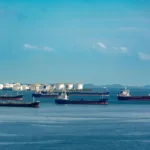









Market Volatility Expected as Middle East Tensions Drive Crude Oil Prices Higher
Financial markets are bracing for heightened volatility on Friday as fresh U.S. military strikes in Iran have triggered a sharp rise in global crude oil prices. Investors are closely monitoring the impact on banking stocks and Oil Marketing Companies (OMCs) as the geopolitical situation in the Middle East deteriorates rapidly.
The escalation follows reports of U.S. strikes targeting strategic infrastructure, including the critical port of Bandar Abbas. Regional tensions have surged, prompting concerns over potential disruptions to oil supply chains and shipping routes, particularly through the Strait of Hormuz.
Context of the Escalation
The current instability stems from a series of tit-for-tat military engagements between U.S. forces and the Iranian Revolutionary Guard Corps (IRGC). Following reports that the IRGC targeted an American airbase in the region, the U.S. responded with overnight strikes in southern Iran.
These developments have rattled Asian markets, which are already struggling with the economic implications of rising energy costs. Analysts note that crude oil acts as a primary barometer for investor sentiment in the region, and any sustained increase in prices typically puts downward pressure on broader equity indices.
Impact on Banking and Energy Sectors
OMCs remain the primary focus for traders as crude price fluctuations directly affect their profit margins and inventory valuations. Historically, when oil prices spike, these companies face margin compression unless they can pass costs on to consumers, which creates a complex balancing act for regulators and corporate leadership.
Simultaneously, banking stocks are under pressure as investors fear that prolonged conflict will lead to increased inflation and interest rate uncertainty. Financial institutions often serve as a proxy for the broader economy, and their performance in the coming sessions will likely reflect the market’s collective appetite for risk during times of war.
Expert Analysis and Market Data
Market analysts at CNBC have observed that the geopolitical risk premium is now firmly embedded in oil futures. Data suggests that any threat to the Strait of Hormuz—a crucial maritime chokepoint—could result in a significant supply shock, keeping prices elevated for the foreseeable future.
“The market is currently pricing in a worst-case scenario regarding supply chain integrity,” said one market strategist. “Until there is a clear path toward de-escalation, capital will likely flow toward defensive assets, leaving cyclical sectors like banking and energy in a state of flux.”


