




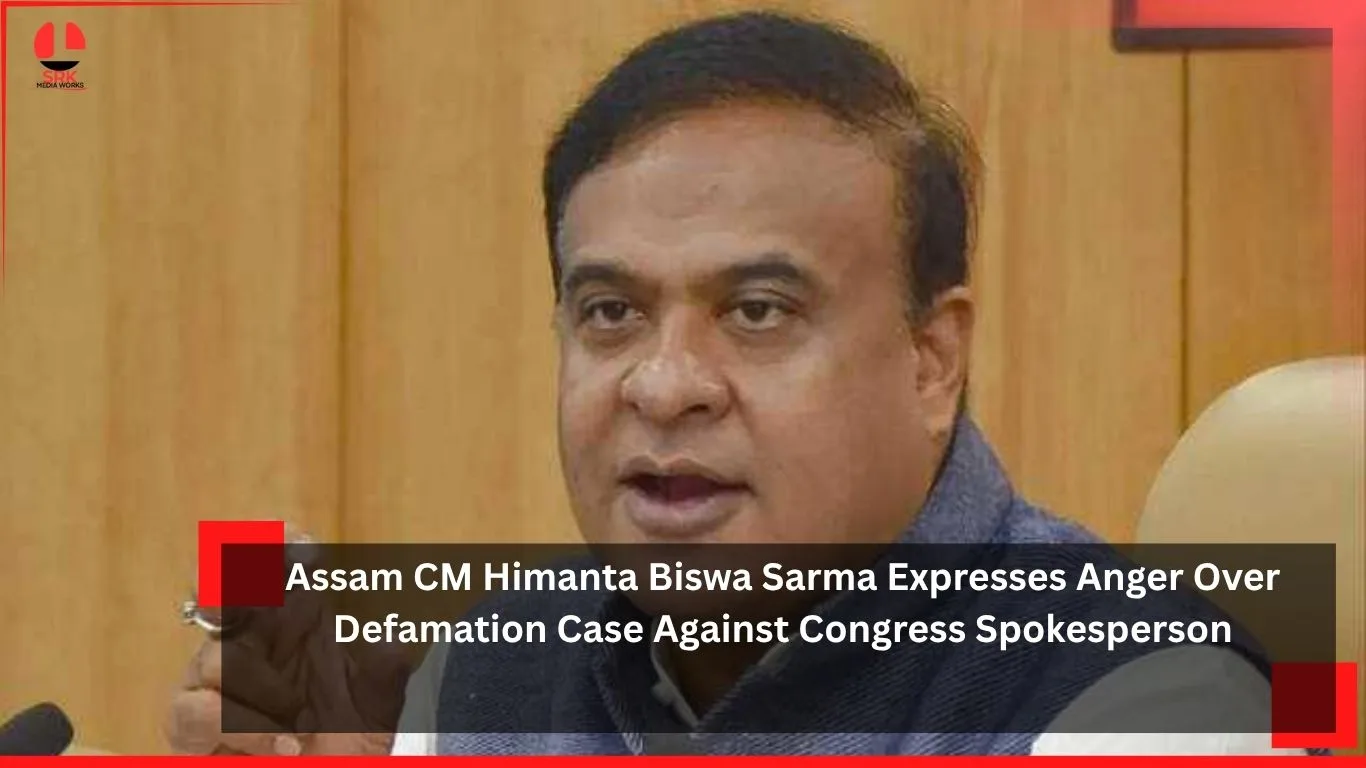
Assam Chief Minister Himanta Biswa Sarma has strongly reacted to the defamation case filed against a Congress spokesperson, calling it politically motivated and an attempt to silence dissent. His remarks have sparked a fresh round of political debate in the state, highlighting the growing tensions between the ruling Bharatiya Janata Party (BJP) and the opposition Congress. Sarma’s anger reflects the broader narrative of political battles being fought not only in legislative assemblies but also in courts across India.
Background of the Case
The defamation case was filed after a Congress spokesperson allegedly made remarks against the Assam Chief Minister, questioning his governance style and political decisions. The BJP leadership has treated the comments as defamatory, while the Congress has defended them as part of legitimate political discourse. Sarma’s sharp response indicates his unwillingness to let such allegations go unchallenged.
Himanta Biswa Sarma’s Reaction
- Strong Condemnation: Sarma expressed anger, stating that defamation cases against opposition leaders are being used as tools of intimidation.
- Political Motivation Alleged: He accused Congress of deliberately targeting him to gain political mileage.
- Defense of Governance: Sarma reiterated that his government has worked tirelessly for Assam’s development, and baseless allegations undermine public trust.
- Warning to Opposition: He cautioned Congress leaders against crossing limits of political criticism, suggesting that legal recourse will be pursued if necessary.
Comparative Overview of Political Defamation Cases
| State | Political Leader Involved | Case Filed By | Allegation | Current Status |
|---|---|---|---|---|
| Assam | Himanta Biswa Sarma | Congress spokesperson | Defamation remarks | Under trial |
| Delhi | Arvind Kejriwal | BJP leaders | Corruption allegations | Ongoing |
| Maharashtra | Devendra Fadnavis | Opposition leaders | Policy criticism | Pending |
This comparison shows how defamation cases have become a common tool in political battles across states.
Impact on Assam Politics
The defamation case has intensified political rivalry in Assam. While BJP leaders rally behind Sarma, Congress leaders argue that freedom of speech is being curtailed. The case could influence upcoming electoral campaigns, with both parties using it to strengthen their narratives.
Pivot Analysis: Legal vs. Political Fallout
| Scenario | Legal Impact | Political Impact | Public Sentiment |
|---|---|---|---|
| Case dismissed | Weakens BJP’s legal stance | Congress gains moral victory | Sympathy for opposition |
| Case upheld | Strengthens BJP’s position | Congress faces setback | Polarized reactions |
This pivot analysis highlights how the outcome of the defamation case could reshape Assam’s political discourse.
Reactions
- BJP Leaders: Defended Sarma, calling the remarks defamatory and unacceptable.
- Congress Leaders: Criticized the case as an attack on free speech and democratic values.
- Civil Society: Mixed reactions, with some supporting accountability and others warning against misuse of defamation laws.
- Public Opinion: Divided, reflecting the polarized political environment in Assam.
Broader Implications
The case underscores the increasing use of defamation laws in India’s political battles. While leaders argue that such cases protect reputations, critics warn that they can be misused to suppress dissent. The Assam episode adds to the growing debate about balancing free speech with accountability in political discourse.
Conclusion
Assam CM Himanta Biswa Sarma’s anger over the defamation case against a Congress spokesperson highlights the deepening political fault lines in the state. As the case unfolds, it will test the boundaries of free speech, political criticism, and legal accountability. The outcome could have significant implications for both BJP and Congress, shaping Assam’s political narrative in the months ahead.
Disclaimer
This article is a journalistic analysis created for informational purposes. It does not represent official government statements or legal conclusions. Readers are encouraged to consult multiple perspectives for updates. The content is intended for educational and news reporting use only, without endorsing any political party or institution.