









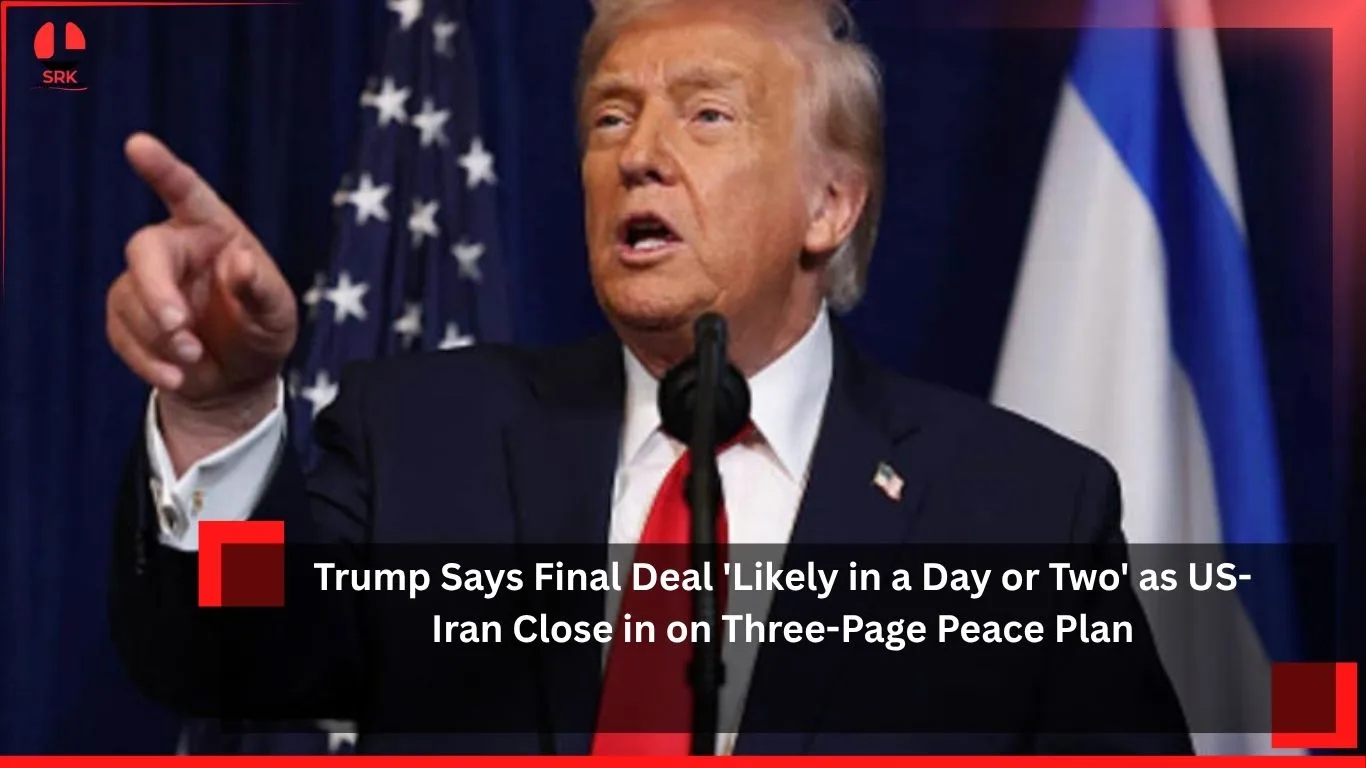
Former US President Donald Trump has announced that a final peace deal between the United States and Iran is “likely in a day or two,” signaling a potential breakthrough in one of the most contentious geopolitical disputes of recent decades. The proposed agreement, reportedly condensed into a three-page document, aims to address critical issues including sanctions relief, nuclear commitments, and regional stability.
Details of the Proposed Peace Plan
According to Trump, the peace plan is designed to be concise yet comprehensive, focusing on the most pressing issues that have strained US-Iran relations. The three-page framework is expected to cover:
- Sanctions Relief: Gradual easing of economic sanctions imposed on Iran.
- Nuclear Commitments: Iran’s pledge to limit nuclear enrichment activities.
- Regional Security: Measures to reduce tensions in the Middle East.
- Diplomatic Engagement: Establishment of channels for ongoing dialogue.
Key Provisions Outlined
| Provision | US Position | Iran Position | Expected Outcome |
|---|---|---|---|
| Sanctions Relief | Conditional easing | Full removal demanded | Partial relief likely |
| Nuclear Program | Strict limits | Civilian use only | Compromise framework |
| Regional Security | Reduce proxy conflicts | Maintain influence | Gradual de-escalation |
| Diplomatic Channels | Direct talks | Equal footing | Joint committees |
Historical Context
US-Iran relations have been fraught with tension since the 1979 Iranian Revolution. Over the years, sanctions, nuclear disputes, and regional conflicts have kept both nations at odds. The 2015 Joint Comprehensive Plan of Action (JCPOA) was a landmark agreement but was later abandoned by the US, reigniting hostilities. Trump’s latest announcement suggests a renewed effort to resolve these issues.
Timeline of US-Iran Relations
| Year | Event |
|---|---|
| 1979 | Iranian Revolution, US embassy hostage crisis |
| 1980s | Sanctions and regional conflicts |
| 2003 | Concerns over Iran’s nuclear program intensify |
| 2015 | JCPOA signed |
| 2018 | US withdraws from JCPOA |
| 2026 | Trump announces imminent peace plan |
Political Reactions
The announcement has triggered varied responses across the political spectrum:
- US Allies: European nations cautiously welcome the development, urging transparency.
- Middle Eastern Nations: Mixed reactions, with some hopeful for reduced tensions and others skeptical.
- Iranian Officials: Express optimism but insist on full sanctions removal.
- Opposition Leaders in US: Question the durability of a three-page agreement.
Economic Implications
The peace plan could have significant economic consequences, particularly if sanctions are eased. Iran’s economy, heavily impacted by restrictions, could see renewed growth. Global oil markets may also stabilize if Iran resumes exports at higher levels.
Potential Economic Outcomes
| Sector | Impact |
|---|---|
| Oil Exports | Increase in global supply, potential price stabilization |
| Trade | Resumption of international partnerships |
| Domestic Economy | Growth in manufacturing and services |
| Global Markets | Reduced volatility in energy prices |
Security Considerations
Regional security remains a critical aspect of the peace plan. The US has emphasized the need for Iran to reduce support for proxy groups in countries like Syria, Iraq, and Yemen. Iran, however, insists on maintaining its regional influence, making this a challenging point of negotiation.
- US Goal: Reduce proxy conflicts and ensure stability.
- Iran’s Goal: Retain strategic influence in the region.
- Compromise: Gradual de-escalation with monitoring mechanisms.
Comparative Analysis of Peace Efforts
| Agreement | Length | Focus | Outcome |
|---|---|---|---|
| JCPOA (2015) | 159 pages | Nuclear program | Temporary success, later abandoned |
| Camp David Accords (1978) | 13 pages | Egypt-Israel peace | Long-term success |
| US-Iran Peace Plan (2026) | 3 pages | Sanctions, nuclear, security | Pending outcome |
This comparison shows that brevity does not necessarily undermine effectiveness, but durability depends on enforcement and mutual trust.
Public Sentiment
Public opinion in both countries is divided. In the US, some view the peace plan as a necessary step toward stability, while others doubt its sustainability. In Iran, citizens hope for economic relief but remain cautious about US intentions.
Future Outlook
The next few days will be crucial in determining whether the peace plan materializes. If signed, it could mark a turning point in US-Iran relations, with implications for global diplomacy and security.
Key Factors to Watch
| Factor | Potential Impact |
|---|---|
| Signing of Agreement | Immediate diplomatic breakthrough |
| Implementation | Determines durability of peace |
| Regional Reactions | Could influence stability in Middle East |
| Global Markets | Likely stabilization of oil prices |
Conclusion
Trump’s announcement that a final deal with Iran is “likely in a day or two” has raised hopes for a breakthrough in one of the world’s most enduring conflicts. The three-page peace plan, though concise, aims to tackle core issues of sanctions, nuclear commitments, and regional security. Whether this agreement will stand the test of time remains to be seen, but its potential impact on diplomacy, economics, and security is undeniable.
Disclaimer
This article is a comprehensive analytical report based on publicly available information and political developments. It is intended for informational purposes only and does not constitute diplomatic, legal, or financial advice. Readers are encouraged to verify facts independently and consider multiple perspectives before forming conclusions.