







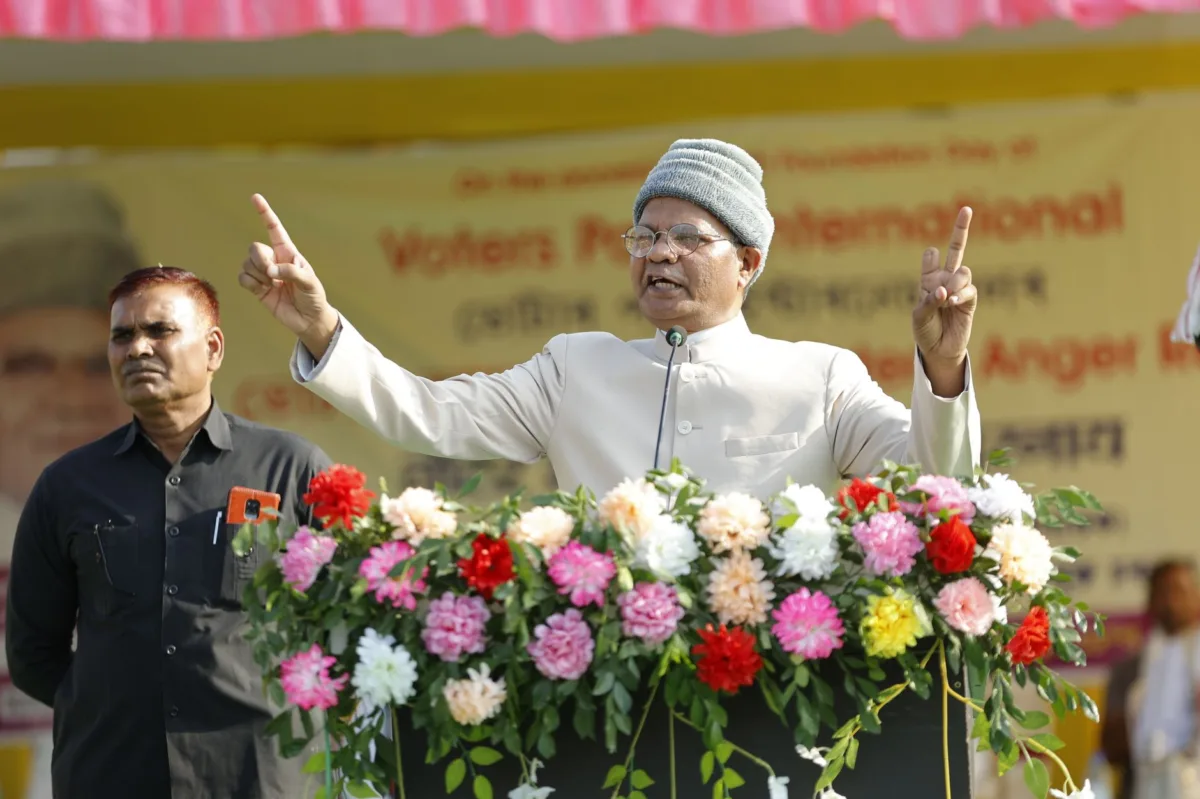
Tamil Nadu Bharatiya Janata Party (BJP) President K. Annamalai met with Union Home Minister Amit Shah in New Delhi this week to discuss his future political trajectory, as speculation intensifies regarding his potential departure from the party. The meeting follows reports that the former IPS officer has expressed intentions to resign from his current post to potentially launch an independent political entity, marking a pivotal moment for the BJP’s expansionist ambitions in Southern India.
Context and Political Backdrop
Annamalai’s tenure has been defined by an aggressive push to establish the BJP as a formidable third force in Tamil Nadu, a state traditionally dominated by the Dravidian parties, the DMK and AIADMK. His 200-day ‘En Mann, En Makkal’ foot march was widely viewed as a strategic blueprint to connect with rural voters and decentralize the party’s image beyond its urban strongholds.
However, recent reports from The Times of India and India Today suggest that internal frictions and strategic disagreements have led to a breakdown in communication between the state leadership and the national high command. While party sources initially indicated that Annamalai submitted a resignation letter to BJP leader Nitin Nabin, the central leadership has reportedly asked him to exercise restraint while negotiations continue.
Strategic Shifts and Internal Dynamics
The uncertainty surrounding Annamalai’s status reflects the broader complexities the BJP faces in states where it lacks a long-standing historical foothold. Political analysts note that Annamalai’s combative style, while effective at mobilizing a dedicated cadre, has occasionally alienated coalition partners and traditional voter bases.
Data from the most recent electoral cycles indicate that while the BJP has increased its vote share in specific pockets of Tamil Nadu, the conversion of this momentum into legislative seats remains a significant hurdle. Experts suggest that the central leadership is currently balancing the need for a strong, charismatic face in the state against the necessity of maintaining cohesive alliance dynamics ahead of upcoming electoral contests.
Industry and Voter Implications
For the BJP, the departure of a high-profile leader like Annamalai would necessitate a rapid reorganization of its state unit. A leadership vacuum could potentially stall the momentum generated by recent grassroots outreach programs, leaving the party vulnerable to consolidation by incumbent regional powers.
For the electorate, this development signals a potential shift in the opposition landscape. If Annamalai proceeds with the launch of a new political party, he would likely be positioning himself as an alternative to both the Dravidian majors and the national parties, fundamentally altering the competitive arithmetic of future state assembly elections.
Observers are now watching for official statements from the BJP central office, which will likely dictate whether Annamalai remains a key figure within the national fold or moves to establish a separate political platform. The coming weeks are expected to clarify whether the party can bridge internal divides or if the state unit will undergo a total leadership transition as it prepares for the next phase of its southern strategy.