








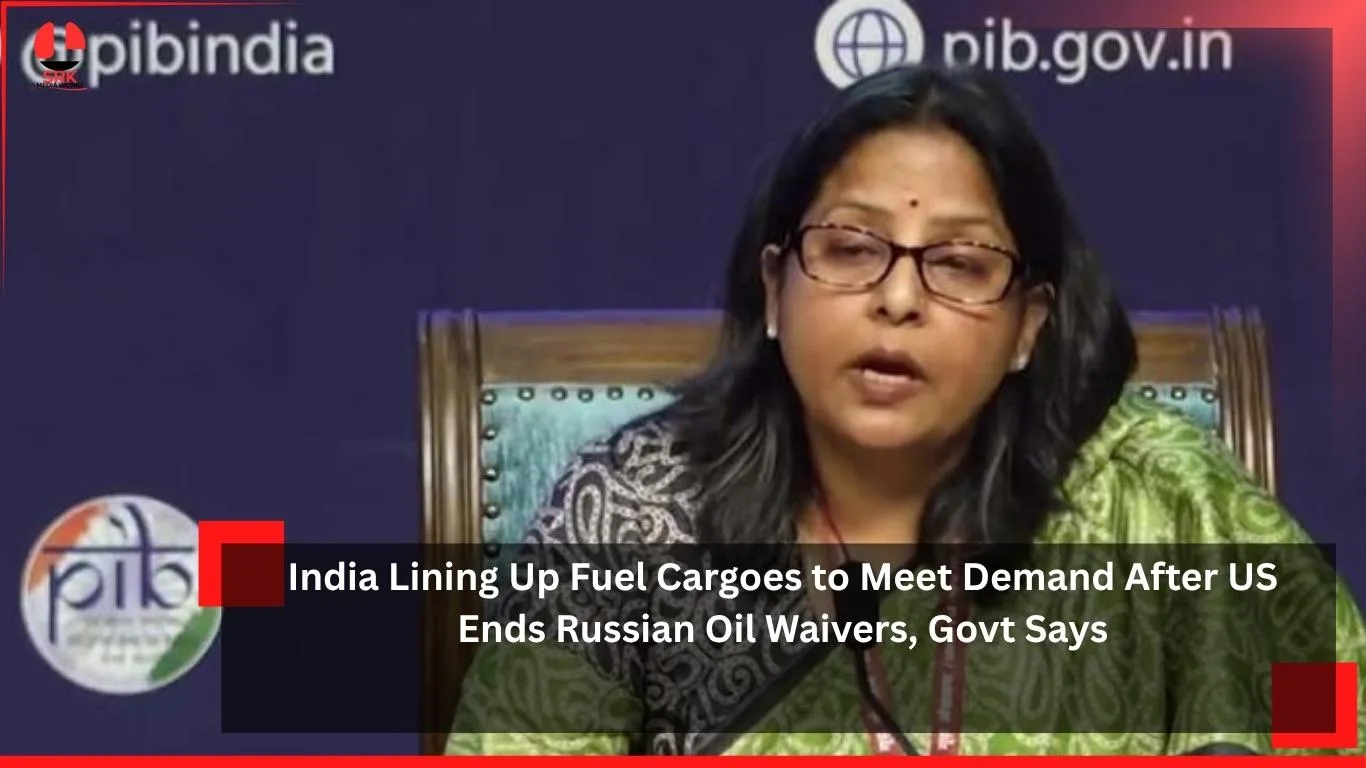
India is preparing to secure additional fuel cargoes to meet rising domestic demand after the United States announced the end of waivers on Russian oil imports. The government has confirmed that steps are being taken to ensure uninterrupted energy supplies, highlighting the country’s strategic approach to balancing global pressures with domestic needs.
Government’s Statement
Officials stated that India is actively lining up fuel cargoes from alternative sources to offset the impact of the US decision. The move comes as global energy markets face volatility, with sanctions on Russia reshaping supply chains. India, one of the world’s largest energy consumers, is determined to maintain stability in fuel availability and pricing.
Key Highlights
| Aspect | Details |
|---|---|
| US Decision | Ended waivers on Russian oil imports |
| India’s Response | Securing alternative fuel cargoes |
| Goal | Ensure uninterrupted supply and meet demand |
| Impact | Potential rise in global oil prices |
Energy Security Challenges
India’s reliance on imported crude oil makes it vulnerable to global disruptions. The end of Russian oil waivers has forced policymakers to explore new supply channels. The government is considering increased imports from Middle Eastern nations, Africa, and Latin America to diversify sources.
- Middle East: Traditional supplier, but geopolitical tensions remain a concern.
- Africa: Emerging supplier with potential for long-term contracts.
- Latin America: Offers diversification but involves higher transportation costs.
Domestic Demand Outlook
India’s fuel demand has been rising steadily due to economic growth, industrial expansion, and increased mobility. The government estimates that demand will continue to grow in the coming years, making energy security a critical priority.
Fuel Demand Projections
| Year | Estimated Demand (Million Barrels/Day) |
|---|---|
| 2024 | 5.2 |
| 2025 | 5.5 |
| 2026 | 5.8 |
| 2027 | 6.1 |
These projections underline the urgency of securing reliable fuel supplies to sustain economic momentum.
Global Market Impact
The US decision to end Russian oil waivers has sent ripples across global markets. Oil prices are expected to rise as supply tightens, affecting countries dependent on imports. India’s proactive approach to securing cargoes is aimed at mitigating these risks.
- Price Volatility: Global crude prices may increase, impacting domestic fuel costs.
- Supply Chain Shifts: Countries are reconfiguring import strategies to adapt.
- Geopolitical Tensions: Energy markets remain sensitive to political developments.
Comparative Analysis of Import Strategies
| Country | Strategy | Impact |
|---|---|---|
| India | Diversifying suppliers, securing cargoes | Maintains stability |
| China | Increasing domestic reserves | Strengthens resilience |
| Japan | Long-term contracts with Middle East | Ensures predictability |
| EU Nations | Reducing reliance on Russia | Transitioning to renewables |
India’s approach reflects a balance between immediate needs and long-term energy security goals.
Strategic Reserves
The government has also emphasized the importance of maintaining strategic petroleum reserves. These reserves act as a buffer against sudden supply disruptions and price spikes. India is expanding its reserve capacity to enhance resilience.
- Current Capacity: Approximately 39 million barrels.
- Expansion Plans: Additional facilities under construction.
- Objective: Cover at least 10 days of national demand.
Industry Reactions
Indian refiners and energy companies have welcomed the government’s proactive stance. Industry leaders stress the importance of securing diverse supply lines to avoid overdependence on any single source.
- Refiners: Preparing to adjust sourcing strategies.
- Energy Firms: Exploring long-term contracts with new suppliers.
- Market Analysts: Predict stable supply but caution about rising costs.
Public Impact
For consumers, the immediate concern is fuel pricing. While the government aims to stabilize costs, global price fluctuations may still affect retail fuel rates. Ensuring affordability remains a key challenge.
Factors Influencing Fuel Prices
| Factor | Impact |
|---|---|
| Global Crude Prices | Directly affects retail fuel rates |
| Exchange Rates | Impacts import costs |
| Domestic Taxes | Significant component of fuel pricing |
| Supply Stability | Ensures availability and prevents shortages |
Future Outlook
India’s energy strategy will continue to evolve as global dynamics shift. The government’s focus on diversification, strategic reserves, and proactive cargo procurement reflects a comprehensive approach to energy security.
Key Priorities Ahead
- Strengthening ties with alternative suppliers.
- Expanding renewable energy to reduce dependence on imports.
- Enhancing strategic reserves for resilience.
- Balancing affordability with sustainability.
Conclusion
India’s decision to line up fuel cargoes following the US move to end Russian oil waivers highlights its determination to safeguard energy security. By diversifying suppliers, expanding reserves, and proactively managing demand, the government aims to ensure stability in a volatile global market. The coming months will test India’s ability to balance international pressures with domestic needs, but its strategic approach positions it well to navigate the challenges ahead.
Disclaimer
This article is an analytical news report based on publicly available information and government statements. It is intended for informational purposes only and does not constitute financial or policy advice. Readers should verify facts independently and consider multiple perspectives before forming conclusions.