






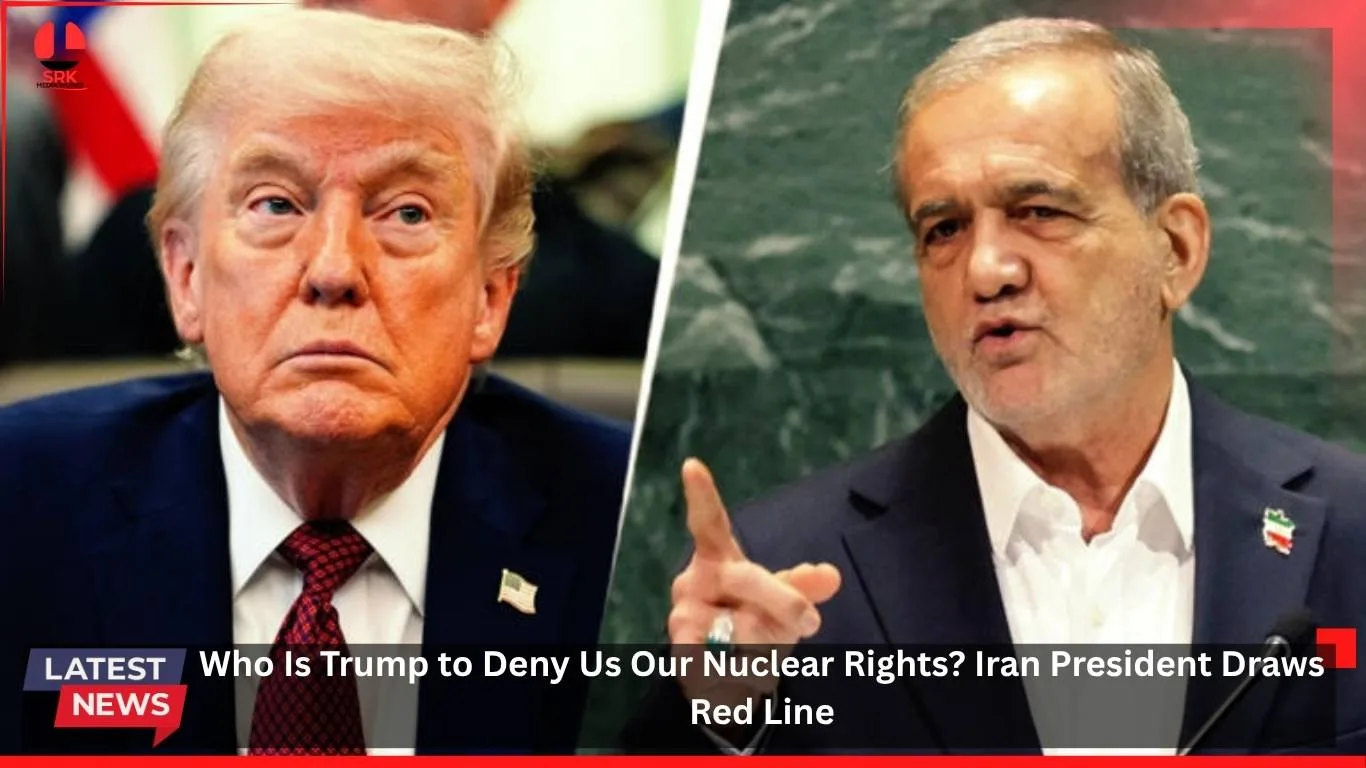
Iranian President has firmly declared that the country’s nuclear rights are non-negotiable, directly challenging U.S. President Donald Trump’s stance on Tehran’s nuclear program. In a fiery statement, the Iranian leader asked, “Who is Trump to deny us our nuclear rights?” This declaration marks a significant escalation in rhetoric, drawing a clear red line in ongoing tensions between Washington and Tehran. The remarks underscore Iran’s determination to pursue its nuclear agenda while resisting external pressure, setting the stage for renewed confrontation in West Asia.
Iran’s Red Line
Iran’s president emphasized that the nation’s nuclear program is a matter of sovereignty and national pride. He insisted that no foreign power, including the United States, has the authority to dictate Iran’s scientific and technological progress.
- Sovereignty Assertion: Nuclear rights framed as a fundamental national entitlement.
- Defiance Against Pressure: Iran refuses to bow to U.S. sanctions or threats.
- Strategic Messaging: Signals to domestic and international audiences that Iran will not compromise.
US-Iran Nuclear Dispute
The nuclear issue has long been a flashpoint in U.S.-Iran relations. Washington accuses Tehran of pursuing nuclear weapons under the guise of civilian energy, while Iran insists its program is peaceful.
| Issue | US Position | Iran’s Position |
|---|---|---|
| Nuclear Program | Prevent weaponization | Peaceful energy development |
| Sanctions | Maintain pressure | Denounce as unjust |
| Diplomatic Talks | Conditional engagement | Demand recognition of rights |
| Regional Security | Limit Iran’s influence | Assert sovereignty |
Analytical Pivot
| Factor | Iran’s Perspective | US Perspective |
|---|---|---|
| Nuclear Rights | Non-negotiable entitlement | Threat to global security |
| Sanctions | Economic warfare | Necessary leverage |
| Diplomacy | Recognition of sovereignty | Conditional on compliance |
| Regional Stability | Protect independence | Prevent escalation |
Strategic Implications
- For Iran: Reinforces its stance as a sovereign nation unwilling to compromise on nuclear rights.
- For the US: Raises stakes in negotiations and sanctions enforcement.
- For Regional Powers: Gulf states and Israel remain wary of Iran’s nuclear ambitions.
- For Global Security: Heightened risk of proliferation and instability in West Asia.
Reactions
- Iranian Officials: Applauded the president’s defiant stance as a defense of sovereignty.
- US Leaders: Reiterated concerns about Iran’s nuclear program and regional activities.
- Analysts: Warned that the rhetoric could derail diplomatic efforts.
- Global Observers: Expressed concern about escalating tensions and potential conflict.
Broader Context
The nuclear dispute is part of a larger geopolitical struggle involving sanctions, military presence, and regional alliances. Iran’s insistence on its nuclear rights reflects its broader strategy of resistance against U.S. pressure. The confrontation also underscores the fragile balance in West Asia, where missteps could ignite a larger crisis.
Challenges Ahead
- Diplomatic Deadlock: Limited channels for negotiation increase risks of escalation.
- Economic Strain: Sanctions continue to pressure Iran’s economy.
- Regional Tensions: Proxy conflicts could intensify amid nuclear disputes.
- Global Security Risks: Potential for proliferation remains a major concern.
Future Outlook
The future of U.S.-Iran relations hinges on whether diplomacy can overcome confrontation. Iran’s red line on nuclear rights makes compromise difficult, while Washington’s insistence on restrictions complicates negotiations. The outcome will shape regional stability and global security for years to come.
Conclusion
Iran’s president drawing a red line by declaring, “Who is Trump to deny us our nuclear rights?” highlights the depth of defiance in Tehran’s stance. The statement underscores Iran’s determination to pursue its nuclear program despite U.S. opposition, raising the stakes in an already volatile region. As tensions escalate, the world watches closely to see whether diplomacy or confrontation will define the next chapter of U.S.-Iran relations.
Disclaimer
This article is based on publicly available reports and political statements. It does not represent official government positions. The content is intended for informational purposes only, highlighting geopolitical developments and their implications. Readers are encouraged to consult multiple sources for a comprehensive understanding of the subject matter.