








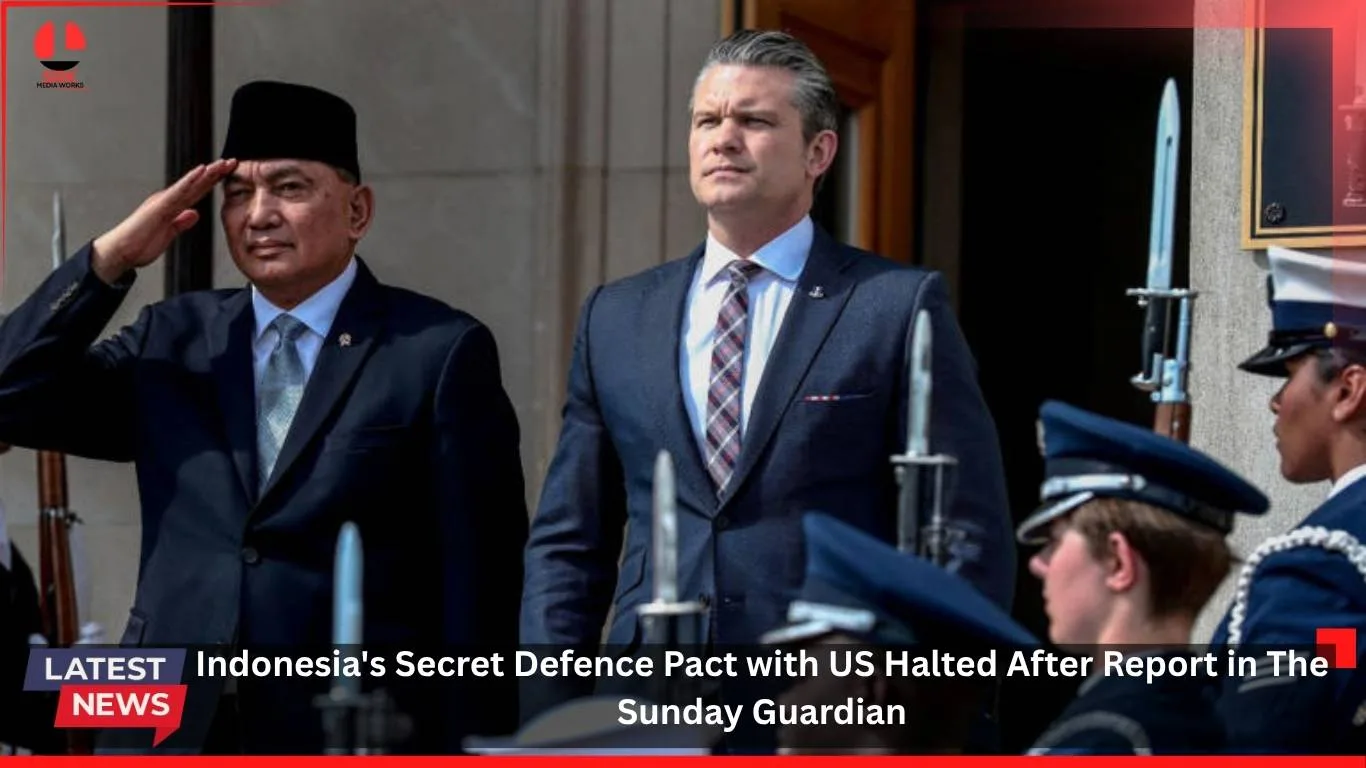
Indonesia’s covert defence pact with the United States has reportedly been halted following revelations published in The Sunday Guardian. The agreement, which was designed to strengthen military cooperation and enhance strategic security in Southeast Asia, has now come under intense scrutiny. The disclosure has sparked debate about transparency, sovereignty, and the future of Indonesia’s foreign policy alignment with Washington.
The Secret Pact
The pact was allegedly negotiated behind closed doors, focusing on joint military exercises, intelligence sharing, and defence technology transfers. While officials initially kept the arrangement confidential, the report exposed details that raised concerns among lawmakers and civil society groups in Indonesia.
- Military Cooperation: Joint naval and air force drills in the South China Sea.
- Technology Transfer: Access to advanced U.S. defence systems.
- Intelligence Sharing: Counter-terrorism and cyber defence collaboration.
- Strategic Goal: Strengthen Indonesia’s position amid regional tensions.
Why It Was Halted
The publication of the report triggered widespread criticism, forcing Indonesian authorities to suspend the pact temporarily.
- Transparency Concerns: Critics argued the deal lacked parliamentary oversight.
- Public Backlash: Citizens questioned the secrecy and potential erosion of sovereignty.
- Political Pressure: Opposition parties demanded accountability from the government.
- Diplomatic Sensitivity: Indonesia sought to avoid appearing overly aligned with U.S. interests against China.
Analytical Pivot
| Factor | Indonesia’s Perspective | US Perspective |
|---|---|---|
| Transparency | Pact lacked public debate | Confidentiality necessary for security |
| Sovereignty | Risk of foreign influence | Strategic partnership |
| Regional Balance | Avoid antagonizing China | Counterbalance to China’s rise |
| Future Outlook | Reassess terms | Push for renegotiation |
Strategic Implications
- For Indonesia: The halt underscores the importance of balancing foreign partnerships with domestic accountability.
- For the US: The suspension complicates Washington’s Indo-Pacific strategy.
- For China: The development may be seen as a diplomatic win, reducing U.S. influence in the region.
- For ASEAN: Raises questions about collective security and regional cooperation.
Reactions
- Indonesian Lawmakers: Called for greater transparency and parliamentary involvement in defence agreements.
- Civil Society Groups: Warned against compromising sovereignty for military aid.
- US Officials: Expressed disappointment but emphasized the importance of continued dialogue.
- Regional Analysts: Noted that the halt reflects Indonesia’s cautious approach to great power rivalry.
Broader Context
Indonesia has historically pursued a non-aligned foreign policy, balancing relations with both the U.S. and China. The secret pact’s exposure highlights the challenges of maintaining neutrality in an increasingly polarized Indo-Pacific region. The halt also reflects growing domestic demand for transparency in defence and foreign policy decisions.
Challenges Ahead
- Domestic Accountability: Ensuring parliamentary oversight in future agreements.
- Diplomatic Balance: Maintaining ties with both Washington and Beijing.
- Security Needs: Addressing defence gaps without compromising sovereignty.
- Regional Stability: Coordinating with ASEAN partners to avoid escalation.
Future Outlook
The suspension of the pact does not necessarily mean its termination. Indonesia may seek to renegotiate terms with greater transparency and public support. The U.S., meanwhile, will likely continue efforts to strengthen ties, viewing Indonesia as a key partner in its Indo-Pacific strategy. The outcome will depend on how both sides navigate domestic and regional pressures.
Conclusion
Indonesia’s decision to halt its secret defence pact with the U.S. following The Sunday Guardian report underscores the tension between strategic necessity and democratic accountability. While the pact aimed to bolster security, its secrecy sparked backlash that forced a reassessment. The incident highlights the complexities of Indonesia’s foreign policy and the delicate balance of power in Southeast Asia.
Disclaimer
This article is based on publicly available reports and political analysis. It does not represent official government positions. The content is intended for informational purposes only, highlighting geopolitical developments and their implications. Readers are encouraged to consult multiple sources for a comprehensive understanding of the subject matter.