






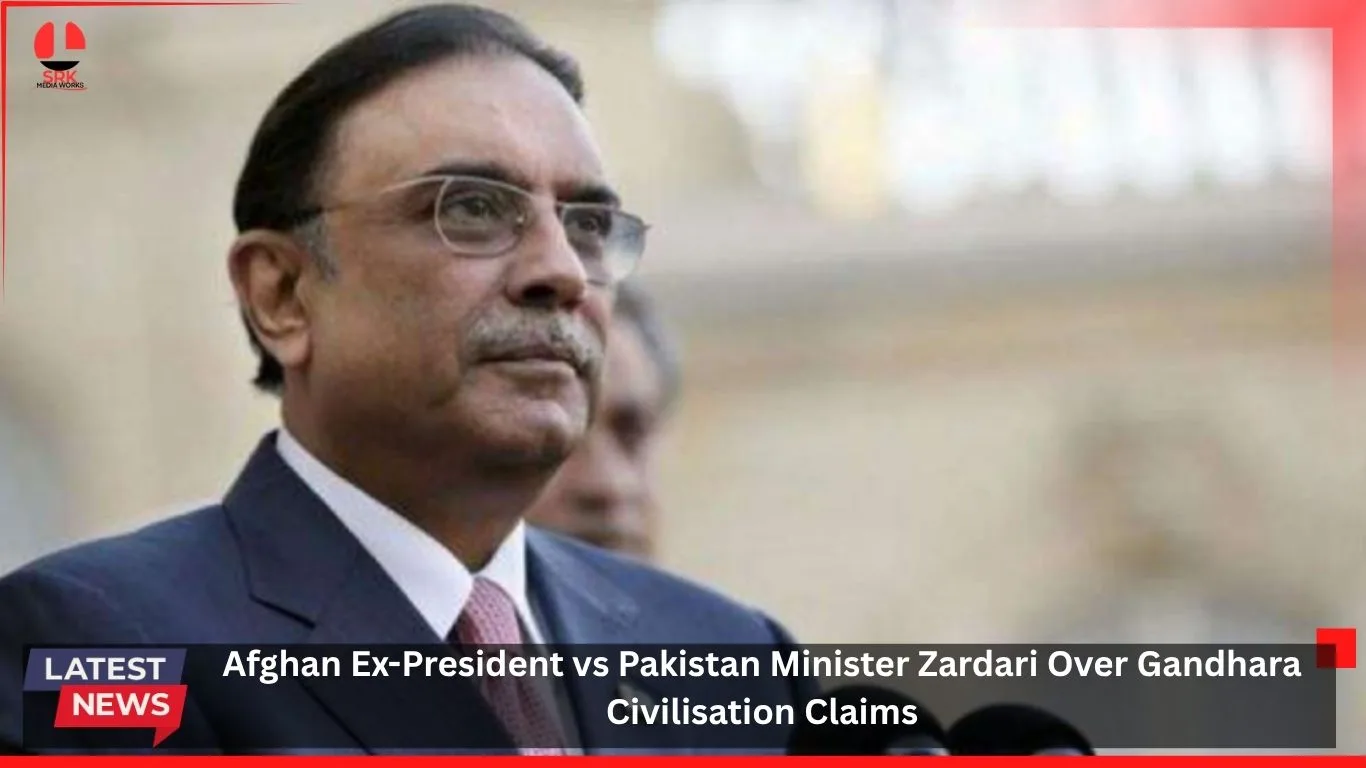
A fresh controversy has erupted between Afghanistan’s former president and Pakistan’s minister Asif Ali Zardari over claims related to the Gandhara civilisation. The dispute has reignited debates about cultural heritage, historical ownership, and the political use of ancient legacies in South Asia.
The Dispute
The Gandhara civilisation, known for its rich Buddhist heritage and Greco-Indian art, flourished in regions that today fall within both Afghanistan and Pakistan. The Afghan ex-president asserted that Gandhara’s roots are deeply tied to Afghan soil, accusing Pakistan of appropriating its legacy. In response, Zardari defended Pakistan’s claim, highlighting the presence of Gandhara sites in Khyber Pakhtunkhwa and Punjab, and positioning Pakistan as the rightful custodian of this ancient civilisation.
Political Context
The clash reflects broader tensions between Afghanistan and Pakistan, where historical narratives often intersect with modern political disputes. Both nations view Gandhara as a symbol of cultural pride, and the debate underscores how heritage can be politicized to reinforce national identity.
Reactions
- Afghan Scholars: Supported the ex-president’s claim, emphasizing Gandhara’s roots in ancient Afghan territories.
- Pakistani Historians: Defended Zardari’s stance, pointing to archaeological sites like Taxila and Peshawar.
- International Observers: Called for recognition of Gandhara as a shared heritage rather than a contested one.
Strategic Implications
The dispute has implications beyond cultural pride, touching on tourism, international recognition, and soft power.
| Stakeholder | Position | Strategic Concern |
|---|---|---|
| Afghanistan | Claims Gandhara heritage | Cultural legitimacy, tourism potential |
| Pakistan | Defends custodianship | National pride, global recognition |
| UNESCO | Neutral | Preservation of sites |
| Tourists | Interested in heritage | Accessibility and safety |
| Scholars | Seek balanced view | Academic integrity |
Historical Background
The Gandhara civilisation thrived between the 1st century BCE and the 7th century CE, blending Hellenistic and Indian influences. Major sites include Taxila, Bamiyan, and Peshawar. Both Afghanistan and Pakistan host remnants of Gandhara art and architecture, making the debate complex.
| Site | Location | Significance |
|---|---|---|
| Taxila | Pakistan | Major Gandhara capital |
| Bamiyan | Afghanistan | Buddhist heritage, giant statues |
| Peshawar | Pakistan | Cultural and trade hub |
| Jalalabad | Afghanistan | Archaeological remains |
Cultural and Economic Impact
The dispute could affect tourism and cultural diplomacy. Gandhara sites attract global interest, and ownership claims may influence how resources are allocated for preservation.
| Area of Impact | Short-Term Effect | Long-Term Outcome |
|---|---|---|
| Tourism | Increased attention | Potential growth if cooperation achieved |
| Diplomacy | Heightened tensions | Opportunity for cultural collaboration |
| Scholarship | Renewed debates | Expanded research |
| Preservation | Risk of neglect | Need for joint initiatives |
Possible Scenarios Ahead
- Continued Dispute: Both sides maintain claims, fueling political tensions.
- Shared Heritage Approach: Afghanistan and Pakistan agree to jointly promote Gandhara.
- International Mediation: UNESCO or global bodies step in to preserve neutrality.
- Tourism Boost: Dispute draws global attention, increasing visits to Gandhara sites.
Expert Opinions
Historians argue that Gandhara should be seen as a shared legacy of South Asia rather than a contested heritage. Political analysts note that the dispute reflects deeper geopolitical rivalries. Cultural experts emphasize the importance of preservation over ownership.
Conclusion
The clash between Afghanistan’s ex-president and Pakistan’s minister Asif Ali Zardari over Gandhara civilisation claims highlights the intersection of history, politics, and identity. While both nations seek to assert ownership, the broader lesson is that Gandhara’s legacy belongs to humanity. Whether the dispute leads to cooperation or further division will depend on how leaders choose to frame heritage in the context of modern diplomacy.
Disclaimer
This article is a journalistic analysis based on current political and cultural developments. It does not endorse or oppose any political leader or nation. Readers are encouraged to consider multiple perspectives and follow verified updates for a comprehensive understanding of the situation.