








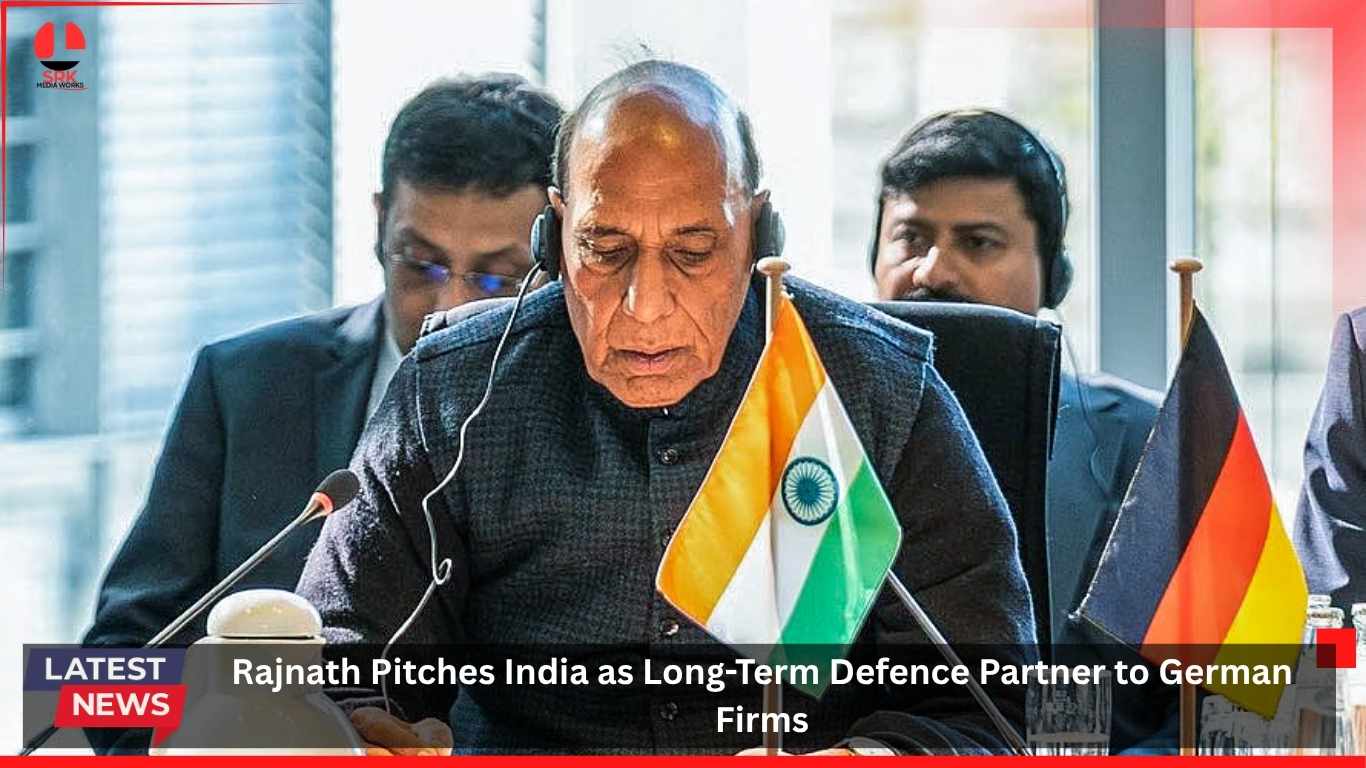
India’s Defence Minister Rajnath Singh has positioned India as a reliable, long-term defence partner for German companies, highlighting opportunities for collaboration in manufacturing, technology transfer, and joint ventures. His pitch comes at a time when India is rapidly modernizing its armed forces and seeking to strengthen strategic ties with European nations.
India’s Defence Vision
Rajnath Singh emphasized India’s commitment to building a robust defence ecosystem that not only meets domestic requirements but also contributes to global security.
- Self-Reliance: India’s “Atmanirbhar Bharat” initiative aims to reduce dependence on imports.
- Global Partnerships: India seeks collaborations with trusted partners like Germany.
- Technology Transfer: Encouraging joint ventures to bring advanced defence technologies to India.
Opportunities for German Firms
German defence companies have been invited to explore long-term partnerships in India’s growing defence sector.
| Area of Collaboration | India’s Interest | German Expertise |
|---|---|---|
| Submarines | Indigenous production | Advanced naval technology |
| Aerospace | Fighter jets, UAVs | Precision engineering |
| Land Systems | Armoured vehicles | Heavy machinery |
| Cybersecurity | Defence networks | Digital security solutions |
This table highlights the complementary strengths of both nations, offering scope for mutually beneficial cooperation.
Strategic Importance
India’s outreach to German firms is part of a broader strategy to diversify defence partnerships.
- European Engagement: Strengthening ties with Germany enhances India’s presence in Europe.
- Indo-Pacific Security: Collaboration supports stability in the Indo-Pacific region.
- Economic Growth: Defence partnerships contribute to industrial growth and job creation.
Expert Opinions
- Defence Analysts: “India’s pitch to Germany reflects a pragmatic approach to building long-term capabilities.”
- Industry Leaders: “German firms see India as a promising market with strong demand for advanced systems.”
- Diplomatic Observers: “This partnership could reshape India-Europe defence relations.”
Historical Context of India-Germany Defence Ties
| Year | Development | Outcome |
|---|---|---|
| 2000s | Initial defence cooperation | Limited engagement |
| 2015 | Strategic partnership talks | Expanded dialogue |
| 2020s | Defence modernization | Increased interest from German firms |
| 2026 | Rajnath’s pitch | Potential long-term collaboration |
This timeline shows the gradual strengthening of India-Germany defence ties, culminating in current efforts to formalize partnerships.
Challenges Ahead
While opportunities are significant, challenges remain:
- Regulatory Hurdles: Defence procurement processes can be complex.
- Technology Transfer Issues: Negotiations over intellectual property rights may be sensitive.
- Geopolitical Factors: Global tensions could impact cooperation.
Conclusion
Rajnath Singh’s pitch to German defence firms underscores India’s ambition to become a global hub for defence manufacturing and innovation. By positioning itself as a long-term partner, India seeks to attract investment, technology, and expertise that will strengthen its armed forces and contribute to regional stability. The move reflects India’s evolving role in global defence partnerships and its commitment to building self-reliance while engaging trusted allies.
Disclaimer
This article is based on publicly available information and commentary regarding India’s Defence Minister Rajnath Singh’s pitch to German firms for long-term defence partnerships. It is intended for informational purposes only and does not represent official statements from governments or defence companies. Readers should rely on official sources for verified updates.